The Gentle Art of Using Nigel: A Practical Guide to This Cursive Italic Handwriting Font
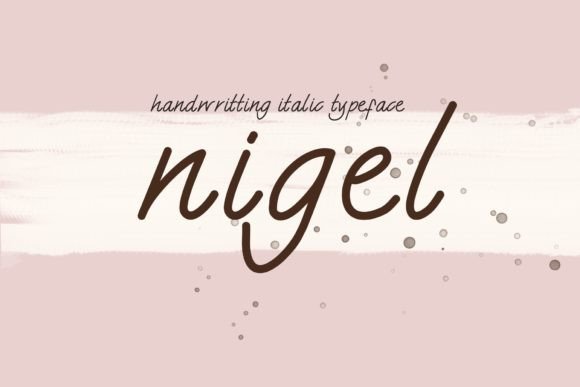
When you first encounter Nigel, it is easy to see why so many people pause and take a second look. This cursive italic handwriting and script font carries a clean, pen-style look that suggests both effort and ease at once. It is not trying to be fancy in a loud way. Instead, it has a quiet, handwritten warmth that feels personal even in digital form. Many beginners and experienced designers alike find themselves drawn to it for projects that need a human touch without losing legibility. But there is a difference between admiring a font and using it well. Over the years, I have seen the same few mistakes appear again and again, costing people time, clarity, and even the overall feel of their finished work. This article is about helping you sidestep those missteps so that Nigel works for you rather than against you.
Let us walk through the most common misunderstandings and overlooked details, then talk about how to get the best results with this particular typeface.
What Makes Nigel Different—and Why That Matters for Your Work
Nigel is not a generic script font. It belongs to the category of cursive italic handwriting fonts, which means it combines the flowing letters of cursive with the slight slant of italic. The pen-style look is intentional: each character feels drawn, not typed. That subtle imperfection is exactly what gives it character. But it also means Nigel behaves differently from more rigid, geometric fonts or even other scripts that lean heavily on calligraphic flourishes.
People often assume that because Nigel looks simple, it will work everywhere without adjustment. That assumption is where mistakes usually begin. Simplicity in design does not mean zero effort. It means the details matter more because there are fewer distractions. A font like Nigel reveals good and bad choices equally.
Mistake One: Treating Nigel Like a Standard Script Font
It is tempting to lump Nigel together with other cursive fonts and treat them all the same. But Nigel has a specific rhythm. Its letterforms are not as tightly connected as some traditional scripts, and it does not rely on heavy swashes or dramatic loops. This makes it more readable at smaller sizes than many script fonts, but it also means you lose the intended effect if you stretch it, squeeze it, or apply heavy tracking.
How This Shows Up in Real Work
A common example is someone using Nigel for a logo or header and then deciding to increase the letter spacing to make it look more "airy." With many fonts, that works fine. With Nigel, that space between letters breaks the cursive flow. The eye sees separate letters instead of connected handwriting, and the font loses its natural rhythm. The result looks disjointed, even if the audience cannot name why.
The Better Approach
Treat Nigel the way you would treat actual handwriting. Let the letters sit close together. If you need more visual breathing room, adjust the line spacing instead of the letter spacing, or choose a different font altogether for that specific use. When you respect the built-in flow of a cursive italic font, the readability and aesthetic both improve.
Mistake Two: Overlooking Pairing and Context
Nigel has a distinct personality. That is one of its strengths, but it also means you cannot pair it with just any other font and expect harmony. I have seen many projects where Nigel was combined with a heavy slab serif or a cold sans-serif, and the contrast was so jarring that the whole page felt like two different documents stuck together.
What Goes Wrong
The pen-style look of Nigel makes it feel organic and slightly soft. Pairing it with a font that is harsh, very wide, or extremely geometric creates visual tension that distracts. The reader might not consciously notice the mismatch, but they will feel that something is off. This can reduce trust in a brand or the professionalism of a document, especially in marketing materials or websites.
How to Choose the Right Partner
Look for fonts that share a similar human quality. A clean sans-serif with moderate proportions often works well. So does a serif that has some warmth in its shapes. The goal is complement, not competition. If you are designing a brand identity, test several pairings and step away for a day before deciding. I have seen people settle on a pairing too quickly and regret it later when they notice the imbalance.
Mistake Three: Ignoring Size and Application Constraints
Because Nigel looks simple and reads fairly well at mid-range sizes, people sometimes assume it can work everywhere from business cards to billboards. That is not quite true.
Where Nigel Excels
Nigel is at its best in medium to larger sizes for display purposes—headlines, quotes, short paragraphs, invitations, social media graphics, and branding elements. It also works beautifully for personal correspondence, handwritten-style notes, or product labels where you want a genuine, approachable feel.
Where It Struggles
At very small sizes, such as body text below 12 points, the cursive italic form can become harder to read. The subtle loops and slants blur together, and the pen-style details get lost. This is not a flaw in the font. It is a limitation shared by most script and handwriting fonts. Trying to force Nigel into a body-text role often leads to lower comprehension and reader fatigue.
Practical Advice
Reserve Nigel for places where its personality can shine: headings, subheadings, pull quotes, or short sections of emphasis. For longer reading, pair it with a clean, highly readable body font. That way, you get the best of both worlds without sacrificing usability.
Mistake Four: Downloading Without Checking Licensing and File Types
This mistake is less about design and more about decision-making, but it affects your project just as much. Nigel is available through various font foundries and marketplaces, and not all versions are created equal.
What People Miss
Some versions may include only a limited character set. Others may lack the italic variant or have inconsistent kerning. Most importantly, the license terms can differ. A font that is free for personal use may require a separate license for commercial work, branding, or use on a website. I have spoken to people who built an entire brand identity around a font, only to discover later that they did not have the rights to use it in their logo or on their product packaging. That is an expensive mistake.
What to Check Before You Buy or Download
- Confirm that the version includes all the glyphs you need—accents, punctuation, numbers, and any special characters.
- Check whether the license covers your intended use: personal, commercial, web embedding, or app usage.
- Look for multiple weights or styles if you plan to use Nigel in different contexts.
- Read the foundry's return or exchange policy. Some allow refunds if the font does not work for your project; others do not.
Taking ten minutes to verify these details can save you hours of rework later.
Mistake Five: Skipping Real-World Testing
Another common oversight is evaluating Nigel only in the font preview tool or in Photoshop at a large size. That preview is helpful, but it does not tell you how the font will behave in your actual project.
Why This Matters
Fonts can look very different once you place them in a layout with other elements, backgrounds, images, or colors. A cursive italic font like Nigel interacts with surrounding space in ways that are not obvious in a simple preview. For example, the slant of the letters may create an optical imbalance when placed next to a straight-edged block of text. The color of the background can affect how well the pen-style details show up.
A Better Workflow
Before you commit, test Nigel in the actual environment where it will be used. Place it in your design software at the real size. Put it on a background that matches your final palette. Try it with and without other elements around it. If possible, show it to someone who has not seen the project before and ask what they notice first. Their honest reaction will tell you more than a hundred preview windows.
Mistake Six: Overusing Nigel Across Too Many Elements
When you find a font you love, the temptation is to use it everywhere. I have seen people use Nigel for headings, subheadings, body text, captions, and even footnotes. That much handwritten-style text in one place quickly becomes chaotic rather than charming.
The Effect on Readability and Tone
A little bit of Nigel goes a long way. Its cursive italic form is inherently distinctive. When you use it sparingly, it feels intentional and special. When you use it for everything, the page feels busy, and the reader has no visual rest. The tone shifts from personal to overwhelming, which works against the very warmth you were trying to create.
Practical Guidelines
Use Nigel for one or two primary roles in a project, such as headlines and a few key phrases. Let other, simpler fonts handle the rest. This creates a clear hierarchy and lets Nigel stand out as a design accent rather than the whole meal.
Toward a More Confident Use of Nigel
The goal here is not to discourage you from using Nigel. On the contrary, it is a genuinely useful and attractive font when applied thoughtfully. The mistakes I have described all share a common root: rushing past the details. Whether it is assuming the font will work at any size, ignoring licensing, or skipping real-world testing, each misstep comes from treating a design choice as a simple yes-or-no decision when it is actually a layered one.
Nigel rewards attention. Its cursive italic handwriting and pen-style look are best appreciated when they are given room to breathe and used in a context that matches their character. If you check the technical details, test thoroughly, and pair wisely, you will find that Nigel can elevate everything from a small business logo to a personal blog header to a creative project that needs a human voice.
Take the extra moment to get it right. The result will feel natural, not forced, and your audience will notice the difference even if they cannot name exactly why. That is the quiet power of a well-chosen font used with care.