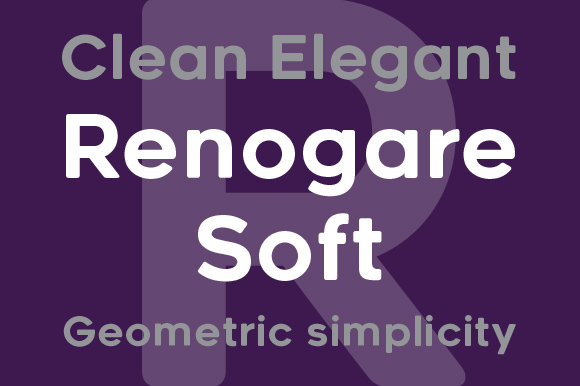
Renogare Soft: How to Choose, Use, and Avoid Costly Font Mistakes
If you're exploring clean, modern typefaces for your next project, Renogare Soft likely caught your attention. It's a geometric sans serif with softened edges—a refined variant of the Renogare font family. Many designers, bloggers, and business owners gravitate toward it for its friendly yet sophisticated look. But selecting and applying a typeface is about more than sharp or soft corners. Common oversights can harm readability, brand consistency, or your project budget. This guide covers what Renogare Soft really offers, the mistakes people make with it, and practical steps to get the best results.
Understanding Renogare Soft: More Than Just a Pretty Font
Renogare Soft is a version of the original Renogare typeface, designed with rounded terminals and smooth contours. The change is subtle but significant: where Renogare has crisp, angular endpoints, Renogare Soft introduces a gentle curve. This makes the font feel more approachable and less rigid, while retaining the geometric clarity that defines the family.
Many users assume that "soft" simply means the font is casual or playful. In reality, it balances warmth with structure, making it suitable for both headlines and body text in branding, editorial design, web interfaces, and signage. Its versatility is one reason it's popular among startups, marketing teams, and creative professionals. However, that versatility can lead to misuse if you don't understand its strengths and limits.
Common Mistake #1: Ignoring the Difference Between Renogare and Renogare Soft
The most straightforward error is treating Renogare Soft as interchangeable with its parent font. While they share the same skeleton, the softened edges change the emotional tone. Renogare conveys precision and efficiency—great for tech companies or corporate reports. Renogare Soft leans toward empathy and accessibility, which works well for lifestyle brands, educational platforms, or health-related content.
If you use Renogare Soft in a context that demands sharp authority (like a legal document), the mismatch can confuse your audience. Conversely, applying the standard Renogare to a community-oriented website may feel cold. Before downloading, ask yourself: Does my message need a gentle touch or a crisp command? Then choose accordingly.
Practical Advice: Test Both Variants in Your Mockup
Create a simple A/B test with a headline and paragraph in both Renogare and Renogare Soft. Show it to a few colleagues or friends without revealing which is which. Their reactions will often highlight which variant fits the intended tone. This small test saves you from a redesign later.
Mistake #2: Overlooking Legibility in Everyday Use
Because Renogare Soft features rounded terminals, some people assume it's automatically friendlier to the eyes. However, geometric sans serifs can become problematic at small sizes—especially on screens. The softened edges may blur together on low-resolution displays, making characters like lowercase a and o look similar.
This oversight affects not only readability but also user satisfaction. If visitors to your website have to squint, they leave. Even in print, using Renogare Soft at body-text sizes (under 10pt) without proper tracking can make content feel cramped and muddy.
Better Approach: Adjust Size, Weight, and Spacing
When using Renogare Soft for body copy, aim for at least 12–14px on screens and 10–12pt in print. Increase letter-spacing slightly (0.5–1px) to improve distinction. Use the Regular or Medium weight rather than Light, which can appear too thin. For headings, the Bold weight retains the soft edges while ensuring impact. Test your settings on both a Retina display and an older monitor to catch problems early.
Mistake #3: Neglecting Font Licensing and Usage Rights
Renogare Soft is a commercial typeface. Many people download it from free font sites without checking the license, only to discover later that they don't have rights for web embedding, app use, or commercial print. This mistake can lead to legal headaches, forced redesigns, or unexpected costs.
Even if a site claims "free for personal use," using the font in a client pitch or on a monetized blog violates the terms. The same applies to free trials that expire. A misplaced license can cost you more than the original purchase.
What to Check Before You Buy or Download
- Desktop license: Covers print and static images. Does it allow embedding in PDFs for distribution?
- Webfont license: Required for @font-face use on websites. Check pageview limits or domain restrictions.
- App license: Needed if you're building a mobile app or software that includes the font.
- Number of users: Some licenses restrict how many people in your team can install the font.
The safest route is to purchase directly from the foundry or a reputable marketplace like MyFonts. Read the EULA carefully before clicking "buy."
Mistake #4: Failing to Consider Font Pairings
Renogare Soft works beautifully on its own, but most projects require at least two typefaces for hierarchy (headings + body). A common mistake is pairing it with another geometric sans serif that has similar proportions, creating a flat, boring look. Or worse, mixing it with a highly decorative font that clashes with its clean geometry.
Good pairings enhance the softness of Renogare Soft. For example, a classic serif like Garamond or a humanist sans like FF Meta adds contrast and rhythm. Avoid pairing Renogare Soft with another rounded sans unless you deliberately want a highly cohesive, friendly feel—which can work for children's brands but becomes monotonous in long-form content.
Example Pairing You Can Try Today
Use Renogare Soft Bold for your section headers and Merriweather (a slab serif) or PT Serif for body text. This gives you a strong, welcoming headline and a comfortable reading experience in paragraphs. Adjust the size ratio so the body text is about 0.75 times the heading size for balanced visual weight.
Mistake #5: Skipping Real-World Testing
It's easy to fall in love with a font on a specimen page. But Renogare Soft behaves differently across media. A common oversight is not testing it in the actual environment where it will be used. For instance, the soft edges may look great on white paper but get lost on a busy background or when printed on uncoated stock.
Other real-world factors include: how the font renders in PowerPoint or Google Docs (limited support), how it performs when kerned automatically by your software, and whether it includes the glyphs you need (like accented characters for multilingual content).
Better Approach: Build a Testing Checklist
- Create a mockup that matches your final output resolution (web, print, video).
- Test at multiple sizes (headline, subhead, body, caption).
- Check on different devices (mobile, tablet, desktop) if used online.
- Print a sample if the project involves physical materials. Use the exact paper stock.
- Import the font into your target software (Figma, InDesign, Word) and confirm all features work.
If Renogare Soft fails any of these tests, you may need to adjust your layout—or consider a different font altogether.
Mistake #6: Using Renogare Soft for Everything Without a System
Versatile fonts tempt you to use them for every element: logo, heading, subhead, body, captions, and even icons. This creates visual monotony and undermines the principle of typographic hierarchy. Readers struggle to distinguish what's important. The soft edges that make Renogare Soft elegant can also make it feel uniform if you don't vary weight, size, or color.
Instead, treat Renogare Soft as part of a family system. Use it for primary headlines and secondary headings (maybe in a lighter weight), but switch to a different typeface for body copy. Or assign specific roles—like brand name in Bold, tagline in Light, and all other text in a companion serif. This approach respects the font's character while giving the reader clear wayfinding.
How to Build a Typographic System with Renogare Soft
- Primary heading: Renogare Soft Bold, 32–48px.
- Secondary heading: Renogare Soft Medium, 18–28px.
- Body text: A serif like Source Serif Pro, 16–18px.
- Captions: Renogare Soft Light, 12–14px with increased letter-spacing.
- Accents: Use a contrasting color or italic version of the body font for pull quotes.
Keep the number of typefaces to two or three for consistency.
What to Check Before You Commit to Renogare Soft
Before making a final decision, run through this short evaluation:
- Language support: Does the font include the characters you need? Some versions may lack Cyrillic or accented Latin characters.
- Weight availability: Does your project require Thin, Light, Regular, Medium, Bold, Black? Renogare Soft typically comes in a range, but confirm.
- OpenType features: Check for ligatures, alternate glyphs, or stylistic sets if needed.
- Compatibility: Will the font work with your content management system, design software, or PDF generator?
- Budget: Factor in license costs vs. the value the font brings. Sometimes a quality free font (like Inter or Manrope) may serve your needs if Renogare Soft is out of budget.
Renogare Soft is a strong choice when you need a clean, approachable geometric sans serif. With careful attention to context, legibility, licensing, pairing, testing, and hierarchy, you can avoid the pitfalls that frustrate many users. Take the time to understand what this font contributes—and what it doesn't. The result will be a project that communicates clearly and looks intentionally designed.