Sugar Vanila: A Handcrafted Display Font with Rustic Charm and Versatility
When choosing a typeface for a headline, logo, or promotional piece, the options can feel endless. Many fonts promise impact but deliver a predictable, mechanical look. Sugar Vanila stands apart as a handcrafted, textured sans serif designed to bring warmth and personality to display work. Its name suggests sweetness, and the font lives up to that promise with a charming, rustic feel that feels both artisanal and modern. This article explores what makes Sugar Vanila distinct, how it compares with other display styles, and when it might be the right choice—or not—for your project.
What Is Sugar Vanila and What Makes It Distinct?
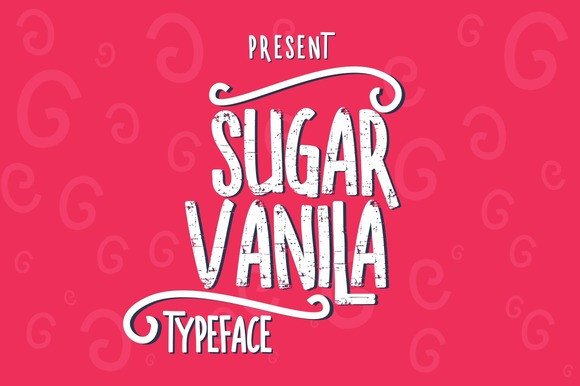
Sugar Vanila is a display font created with a deliberate handcrafted approach. Unlike many polished, geometric sans serifs, it carries visible texture, slight irregularities, and a tactile quality that mimics lettering done with a brush or a rough pen. The strokes are not perfectly uniform; they have subtle variations in weight and edge softness that give the typeface a natural, organic feel. This texture is key to its rustic charm—it looks like it was stamped or drawn by hand, not generated by a machine.
The font’s sweetness, referenced in its name, comes through in its friendly, approachable curves. Letters like “a,” “e,” and “g” have open, inviting shapes, while the overall spacing feels generous and airy. Sugar Vanila is unequivocally sweet, but it avoids being cloying because the rough edges and grain add a grounded, earthy counterweight. This balance makes it suitable for designs that need to convey warmth, nostalgia, or authenticity without tipping into saccharine territory.
As a display font, Sugar Vanila is optimized for larger sizes. It shines in headlines, logotypes, short quotes, and any application where the letterforms themselves can be a focal point. The textured finish is not just a visual gimmick; it helps the font stand out in both print and digital media, especially when paired with clean, minimal backgrounds or contrasted with smooth, neutral typefaces.
How Sugar Vanila Compares with Other Display Options
When evaluating Sugar Vanila, it helps to place it within the broader landscape of display typefaces. Display fonts generally fall into categories like clean sans serifs, script fonts, ornate serifs, and hand-drawn styles. Sugar Vanila occupies a unique intersection: it is a sans serif with handcrafted texture, which sets it apart from both sterile modern sans serifs and overly intricate decorative fonts.
- Versus clean modern sans serifs: Fonts like Helvetica, Gotham, or Montserrat are clean, uniform, and highly legible at various sizes. They excel in corporate or minimalist designs but can feel cold or impersonal. Sugar Vanila brings a human touch; its irregularities add character that a uniform sans serif lacks. However, it does not offer the same crispness for small text or data-heavy layouts. If you need a typeface for body copy or long reading, a clean sans serif is a better fit. Sugar Vanila is strictly for display use.
- Versus script or handwritten fonts: Script fonts mimic cursive handwriting and often convey elegance or informality. Sugar Vanila, being a sans serif, avoids the loops and connections of scripts, so it reads more clearly in short statements. It offers a similar handcrafted feel but with better legibility at larger sizes. For a logotype that needs to be read quickly, Sugar Vanila may outperform a flowing script that can lose clarity in bold or thick strokes.
- Versus ornate serif display fonts: Serif display typefaces like those with high contrast or decorative flourishes can evoke tradition, luxury, or vintage aesthetics. Sugar Vanila’s rustic charm is more casual and grounded. It works well for brands that want to feel artisanal, organic, or approachable—like a bakery, a craft brewery, or a handmade goods shop. If you need a formal or elegant tone, an ornate serif might be more appropriate.
Sugar Vanila is not a one-size-fits-all solution. Its strengths lie in specific contexts where warmth, texture, and readability at scale are priorities. Understanding these comparisons helps you decide whether it aligns with your project’s goals.
Strengths and Best-Fit Use Cases for Sugar Vanila
Sugar Vanila excels in scenarios where you want the typeface to convey a story. Because of its handcrafted nature, it instantly suggests artisanal quality, care, and a personal touch. Here are some ideal applications:
- Branding for small businesses and startups: Companies in the food, beverage, wellness, or creative industries often use fonts like Sugar Vanila to build a friendly, authentic brand identity. A coffee shop logo, a natural skincare label, or a handmade ceramics brand would benefit from the font’s rustic charm.
- Posters and event materials: For music festivals, farmers’ markets, workshops, or community events, Sugar Vanila adds a lively, handmade feel. It pairs well with illustrations, wood-cut textures, or organic shapes.
- Packaging design: Product packaging that wants to stand out on a shelf with a crafted, small-batch look can use Sugar Vanila for product names or taglines. The texture helps the text feel integrated with the packaging material, especially on kraft paper or matte finishes.
- Digital headlines and social media graphics: In a digital world full of clean sans serifs, a textured display font like Sugar Vanila catches the eye. It works well on hero banners, quote cards, or landing page headings where you want to break away from the sterile look of many websites.
The font’s sweetness is a real asset in these contexts. It makes the message feel warm and inviting, which can increase engagement with your audience. However, it is important to avoid overusing it. Because Sugar Vanila is highly distinctive, applying it to every element of a design can overwhelm the viewer. Use it sparingly as a focal point, and pair it with a simpler sans serif for secondary text.
Tradeoffs and Limitations to Consider
No typeface is perfect for every situation, and Sugar Vanila has clear tradeoffs that should factor into your decision. First and foremost, its display-only nature means it is not suitable for body copy. At small sizes (below about 18–24 points, depending on the medium), the texture can blur, and the irregular strokes reduce legibility. If your project requires reading long paragraphs, you will need a companion body font.
Another limitation is the niche audience. While the rustic, handcrafted look appeals to many, it may not fit every brand. Corporate, legal, financial, or high-tech industries typically prefer clean, neutral typefaces that project professionalism and efficiency. In those contexts, Sugar Vanila might feel out of place or even frivolous. Always consider the tone of your message and the expectations of your audience.
The textured quality also affects how the font renders on different screens. On low-resolution displays or in small digital sizes, the grain can become pixelated or muddy. For web usage, ensure you test Sugar Vanila at the intended display sizes and on various devices. You may need to adjust font weight or size to preserve clarity.
Finally, because Sugar Vanila is handcrafted, the character set may not be as extensive as that of a standard commercial font. Check that it includes the glyphs you need, such as accented characters for multilingual use, or specific punctuation. Some handcrafted fonts have limited language support, which could be a constraint for global projects.
Decision Factors: When to Choose Sugar Vanila and When to Explore Alternatives
Making an informed choice about Sugar Vanila involves weighing its unique benefits against the requirements of your specific project. Start by asking: what feeling do you want the typeface to communicate? If warmth, authenticity, and a handmade quality are central, Sugar Vanila is an excellent candidate. If you need a font that feels modern, minimal, or highly professional, you might prefer a clean sans serif or a refined serif.
Consider the scale of usage. Sugar Vanila works best when its texture and shape can be appreciated—typically in large headlines, logos, or short text blocks. For small text, such as body copy or captions, it is not appropriate. If your project revolves around heavy text content, look for a versatile typeface family that includes both display and text weights.
Another factor is the overall design palette. Sugar Vanila pairs well with other rustic or organic elements—like natural colors, rough textures, or photographic imagery with a analog feel. If your design is sleek and digital-first, the font may clash. It is important to consider the entire visual system, not just the font alone.
Finally, evaluate your audience. Are they looking for something familiar or for a fresh, artisanal experience? For a young, design-aware demographic, Sugar Vanila could be a delightful surprise. For a more conservative audience, it might be too informal. Testing a mockup with your target users can provide valuable feedback.
Realistic example: Imagine you are designing a logo for a small-batch honey brand. The brand’s values are natural, pure, and handcrafted. Using Sugar Vanila for the brand name in a warm amber color on a kraft label would reinforce that message. The font’s sweetness echoes the product’s flavor. In contrast, if you were designing a logo for a fintech startup, the same font would likely feel mismatched—a clean sans serif or a modern geometric font would better convey trust and efficiency.
Pairing Sugar Vanila with Complementary Fonts
To get the most out of Sugar Vanila, pair it with a neutral sans serif for body text and subheadings. A simple, lightweight font like Open Sans, Lato, or Source Sans can provide contrast without competing. The combination allows the display font to shine while maintaining readability for longer content. For example, use Sugar Vanila for a poster headline, then set event details in a clean sans serif at a smaller size. This approach maximizes impact without sacrificing function.
Final Thoughts on Choosing Sugar Vanila
Sugar Vanila is a distinctive, handcrafted display font that brings rustic charm and sweetness to design projects. Its textured sans serif style offers an alternative to both overly polished fonts and overly decorative scripts. By understanding its strengths, tradeoffs, and ideal use cases, you can decide whether it fits your needs. It is not a universal solution, but when used intentionally, it can elevate a brand or message with authenticity and warmth. As with any typeface, test it in context, consider the overall design system, and let the intended tone guide your choice. With the right application, Sugar Vanila can be a memorable and effective tool in your typography toolkit.