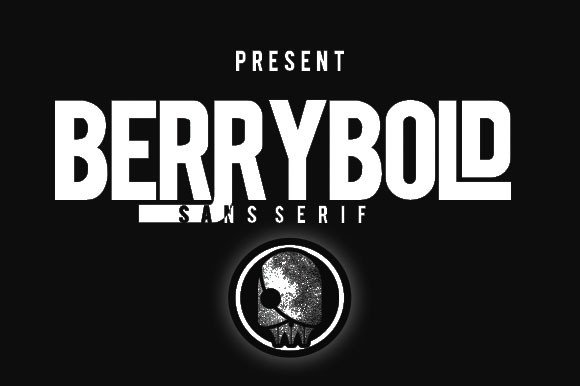
Berrybold: A Display Font That Delivers Impact Without Sacrificing Clarity
When a project calls for a typeface that commands attention, the choice often comes down to weight, spacing, and visual character. Berrybold, a heavy-weight display font with a clean yet assertive presence, offers a practical option for designers and content creators who need text that stands out without relying on decorative embellishment. Berrybold is very bold by design, and that directness is precisely what makes it worth discussing. This article examines what Berrybold brings to the table, how it performs in real workflows, and who is likely to find it most useful.
What Makes Berrybold Distinct
Berrybold is not a subtle typeface. Its thick strokes, compact letterforms, and strong vertical presence make it immediately noticeable. Designed as a display font, it is built for large sizes where weight and clarity matter more than versatility at smaller scales. The letterforms are structurally consistent, with even spacing and a balanced x-height that helps maintain legibility even when the font is used in dense arrangements.
The boldness of Berrybold is not just a matter of thickness. The proportions are carefully managed so that the weight does not distort the character shapes. Ascenders and descenders are kept proportional, and the counters—the open spaces inside letters such as e and a—remain open enough to preserve readability. This attention to structure is what separates Berrybold from fonts that simply increase weight without adjusting the underlying geometry.
Clean yet high impact is how those who use Berrybold often describe it. The font avoids excessive ornamentation, relying instead on its heft and consistent stroke width to create visual impact. This makes it a practical choice for projects where the message needs to be delivered quickly and without visual noise.
Strengths in Real-World Application
When evaluating a display font, the real test is how it performs in actual use. Berrybold shows its strengths in several common scenarios.
Headlines and Titles
For editorial layouts, landing pages, or presentation slides, Berrybold provides a clear, assertive headline option. Its weight ensures that even a single word can anchor a composition. In testing, the font holds up well at large sizes, with no visible degradation in stroke quality or spacing irregularities. It pairs naturally with lighter sans-serif or serif body fonts, offering a clear hierarchy without requiring extensive kerning adjustments.
Branding and Identity
Brands that want to communicate strength, stability, or directness may find Berrybold useful in logotypes, taglines, or packaging. The font's uniform weight gives it a monolithic quality that works well for short, bold statements. It is less suited to highly detailed or intricate logos, but for text-driven marks, it offers reliable performance.
Posters and Signage
Because Berrybold is designed for impact at a distance, it is a strong candidate for posters, banners, and signage. The thick strokes remain visible even when scaled down slightly for secondary text, as long as the context remains large format. For outdoor or digital signage where readability from a distance is critical, the font's weight provides an advantage over thinner display options.
Social Media Graphics and Digital Ads
In digital environments where attention spans are short and competition for visual attention is high, Berrybold's bold presence helps key messages stand out. It renders well on screens, maintaining its weight across different resolutions. For Instagram posts, YouTube thumbnails, or banner ads, the font delivers immediate visibility without requiring extra visual effects to compensate for weak typography.
Practical Considerations for Designers and Creators
Choosing a display font involves more than visual appeal. Workflow considerations such as file compatibility, licensing, and pairings matter for consistent results.
File Formats and Licensing
Berrybold is typically available in standard formats like OTF and TTF, with some distributors offering WOFF for web use. Before committing to a project, it is wise to confirm that the license covers the intended use, whether for commercial branding, digital products, or print runs. Some licenses restrict usage to a certain number of users or projects, so reading the terms is essential.
Pairing with Other Fonts
Berrybold pairs best with neutral body typefaces that do not compete for attention. A lightweight sans-serif like Open Sans or a clean serif like Merriweather can provide contrast without clashing. The key is to let Berrybold carry the emphasis while the body font handles the informational load. In practice, pairing Berrybold with a narrow, light sans-serif creates a balanced layout that feels both bold and readable.
Size and Spacing Recommendations
For print work, Berrybold performs well at 24 points and above. At smaller sizes, the weight can cause letterforms to feel crowded, especially in all-caps settings. Increasing tracking (letter-spacing) slightly, by 2 to 5 percent, can improve readability without diminishing the bold effect. For digital use, testing on different screen sizes is recommended, as the font's weight can appear heavier on low-resolution displays.
Who Benefits Most From Berrybold
Berrybold is not a universal font, and that is part of its value. It serves specific needs and audiences well.
- Graphic Designers working on branding projects will appreciate its consistent structure and clean lines. When a client needs a font that projects confidence and clarity, Berrybold offers a reliable option that is less common than standard bold fonts but more restrained than decorative alternatives.
- Marketers and Content Creators producing digital assets will find Berrybold useful for headlines, call-to-action text, and promotional graphics. Its high-impact presence helps key messages get noticed, which is often the primary goal in advertising and social media content.
- Small Business Owners who manage their own branding can benefit from Berrybold if they need a font that works across both print and digital materials. Its clean design reduces the risk of visual inconsistency when used across different media.
- Educators and Publishers creating presentation slides, posters, or cover pages may find Berrybold helpful for titles and section headers. Its weight ensures that titles remain readable even in brightly lit rooms or at the back of a lecture hall.
Limitations and Considerations
No typeface is perfect for every context, and Berrybold has its own constraints.
Not Suitable for Body Text
Berrybold's weight makes it impractical for extended reading. Using it for paragraphs or dense informational content would strain readability and create a visually overwhelming layout. It is strictly a display font for short, emphasized text.
Limited Character Set
Some versions of Berrybold may include only basic Latin characters and numerals. Before using the font in multilingual projects, check whether the character set covers the required languages. For projects needing special characters or extended ligatures, alternative display fonts may be more appropriate.
Potential for Overuse
Because Berrybold is visually dominant, using it too frequently within a single composition can reduce its impact. It works best as an accent font, reserved for headlines, key phrases, and focal points. Overuse may lead to visual fatigue and a cluttered appearance.
Licensing Costs
Depending on the distributor, Berrybold may carry a higher price tag than standard system fonts. For one-off projects, the cost may be justified by the font's distinctive look. For ongoing use across multiple projects, factoring the license fee into the budget is worth considering.
Final Observations
Berrybold is a well-constructed display font that delivers on its promise of a clean yet high-impact presence. Its value lies in its structural consistency, balanced weight, and straightforward visual character. While it is not designed for every use case, it serves its intended role effectively when applied with care.
For designers and creators who need a bold typeface that does not rely on decorative flourishes, Berrybold offers a practical tool. Its strengths are most apparent in large-format headings, branding elements, and digital graphics where clarity and heft matter. By understanding its limitations and pairing it thoughtfully with complementary typefaces, users can make Berrybold a reliable part of their design toolkit.
Whether you are working on a brand identity, a poster campaign, or a set of presentation slides, Berrybold provides a bold, clean option that is worth considering for projects that call for a strong visual statement.