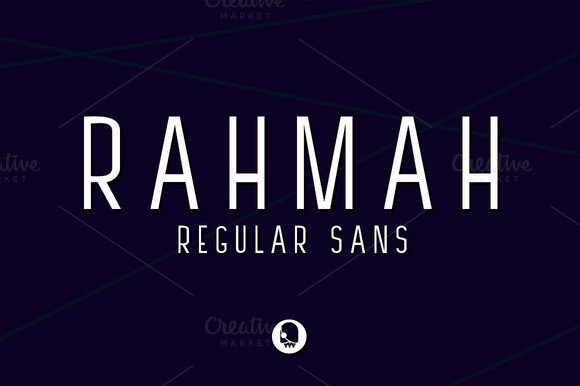
Rahmah & Rahmah Sans: A Modern, Squared Sans Serif Font for Creative Design
In the ever-evolving world of typography, few typefaces manage to strike the perfect balance between clean functionality and distinct character. Rahmah and Rahmah Sans do exactly that. These two complementary fonts — the first a squared, condensed sans serif, and the second its streamlined sibling — have quickly become favorites among designers looking for something modern, bold, and versatile. Whether you are working on a photographic editorial, a minimal brand identity, or a sleek print layout, Rahmah and Rahmah Sans offer a fresh voice that feels both contemporary and grounded.
This article explores everything you need to know about this typeface family — from its visual characteristics and design philosophy to practical applications in modern creative work. By the end, you will understand why Rahmah and Rahmah Sans are worth considering for your next project, and how they can elevate your designs with clarity and elegance.
What Makes Rahmah and Rahmah Sans Unique?
Rahmah is a squared, condensed sans serif typeface. Its letterforms are compact, with a vertical emphasis that makes each character feel deliberate and structured. The square proportions give the font a geometric, almost architectural quality, while the condensed width allows it to pack more text into a given space without sacrificing readability.
Rahmah Sans, as its name suggests, is the simpler, more minimal version of the same design. It retains the squared DNA and condensed structure but strips away any extra ornamentation, resulting in a typeface that is even more neutral and unobtrusive. Together, the two fonts form a cohesive family that can handle a wide range of typographic tasks.
Here are the key visual traits that define the Rahmah family:
- Squared letterforms — Characters are built on a rectangular geometry, giving them a sturdy, modern appearance.
- Condensed width — The letters are narrower than standard sans serifs, allowing for efficient space usage in headlines and layouts.
- Clean lines — No serifs, flourishes, or decorative extras — just pure, functional form.
- Consistent stroke weight — The thickness of each line remains uniform, reinforcing the font's minimalist ethos.
- Strong vertical axis — The upright posture of the letters conveys stability and confidence.
These characteristics make Rahmah and Rahmah Sans instantly recognizable without being flashy. They are typefaces that speak through structure rather than ornament.
The Purpose and Significance of Squared, Condensed Sans Serifs
To understand why Rahmah and Rahmah Sans matter, it helps to step back and look at the broader role of sans serif typography in modern design. Sans serif fonts — those without the small "feet" or strokes at the ends of letters — have dominated digital and print design for decades. They are prized for their clarity, neutrality, and adaptability.
Within the sans serif category, squared and condensed variants occupy a special niche. The squared forms provide a sense of order and precision, while the condensed width allows designers to create impactful headlines and layouts that feel dense but not crowded. This combination is especially valuable in:
- Magazine and editorial design, where space is at a premium and visual hierarchy matters.
- Brand identity systems, where a consistent, legible typeface helps build recognition.
- Packaging and product labels, where readability from a distance is crucial.
- Digital interfaces and web design, where clean, compact type improves user experience.
Rahmah and Rahmah Sans bring all these benefits together in a single family, giving designers a reliable tool for projects that demand both style and substance.
How Rahmah Fits Into Modern Creative Work
Modern design is increasingly about efficiency and impact. Clients and audiences have less patience for clutter, and every element of a layout must earn its place. Rahmah and Rahmah Sans excel in this environment because they do not compete for attention — they create the structure that lets other elements shine.
Photographic Editorials and Visual Storytelling
One of the standout applications for the Rahmah family is in photographic editorials. When images are the primary storytelling vehicle, the typeface must support rather than overpower the visuals. The squared, condensed forms of Rahmah sit comfortably alongside photography, providing captions, headings, and pull quotes that feel integrated with the image rather than pasted on top.
Imagine a fashion editorial where full-bleed photographs dominate each spread. A wide, decorative font would compete with the visuals; a thin, delicate one might get lost. Rahmah's sturdy strokes and condensed proportions allow it to hold its own without stealing focus. The result is a clean, cohesive layout where text and image work in harmony.
Print Design and Brand Applications
For print design — whether business cards, brochures, posters, or stationery — Rahmah and Rahmah Sans deliver a modern and clean feel. The squared geometry gives printed materials a contemporary edge, while the sans serif simplicity ensures legibility at various sizes.
Consider a brand identity for a tech startup or creative studio. Using Rahmah for the logo and headlines, paired with Rahmah Sans for body text, creates a consistent visual language that feels intentional and polished. The condensed width also means that longer company names or taglines can fit neatly into tight spaces, such as the spine of a notebook or the footer of a website.
Digital Interfaces and User Experience
While Rahmah and Rahmah Sans are especially suited for print and editorial work, they also perform well in digital contexts. Their clean lines and strong readability make them viable choices for app interfaces, landing pages, and digital publications. Because they are condensed, they can display more content on smaller screens without requiring users to scroll excessively.
That said, it is worth noting that condensed fonts are not ideal for long-form body text in digital reading — especially at very small sizes. For paragraphs of continuous reading, a more standard-width sans serif is often preferable. But for headings, labels, buttons, and short blocks of text, Rahmah and Rahmah Sans are excellent options.
Clarifying Common Misunderstandings About Condensed Fonts
Some designers hesitate to use condensed typefaces because they assume they are hard to read or only suitable for headlines. While it is true that extremely condensed fonts can become hard to decipher at small sizes, Rahmah and Rahmah Sans are designed with careful proportions that preserve legibility even when scaled down.
Another misconception is that squared fonts feel cold or mechanical. In reality, the geometry of a squared sans serif can be warm and inviting when paired with the right colors, textures, and imagery. Rahmah, in particular, has a subtle softness in its curves that prevents it from feeling rigid or industrial. It is squared but not sterile — a fine distinction that separates great typefaces from merely functional ones.
Finally, some designers think condensed fonts are only for niche or avant-garde projects. On the contrary, Rahmah and Rahmah Sans are versatile enough for mainstream use in corporate branding, educational materials, and even book design. Their clean aesthetic makes them appropriate for a wide range of industries and audiences.
Practical Tips for Using Rahmah and Rahmah Sans in Your Work
Getting the most out of any typeface requires thoughtful pairing and layout decisions. Here are some practical recommendations for working with the Rahmah family:
- Use Rahmah for headlines and display text. Its squared, bold character makes a strong impression at larger sizes. Let it anchor your visual hierarchy.
- Use Rahmah Sans for subheadings and short body copy. The cleaner, more neutral variant works well at smaller sizes and keeps the overall design feeling consistent.
- Avoid setting long paragraphs in the condensed style. For continuous reading, consider pairing Rahmah or Rahmah Sans with a standard-width serif or sans serif (such as a classic humanist or grotesque typeface).
- Watch your letter spacing. Because the characters are condensed, adding a small amount of tracking (letter spacing) can improve readability, especially in all-caps settings.
- Pair with generous white space. The compact nature of the typeface benefits from breathing room. Use margins, padding, and line spacing to give the letters space to perform.
- Test at multiple sizes. Always preview your type at the actual dimensions it will be used — on screen and in print — to ensure legibility and visual balance.
How Rahmah and Rahmah Sans Fit Into the Broader Typography Landscape
The typography world is vast, but certain trends have shaped the demand for typefaces like Rahmah. The rise of minimalism and modernism in design has pushed many creatives toward cleaner, more geometric forms. At the same time, the explosion of digital media has created a need for fonts that remain legible across devices and screen sizes.
Rahmah and Rahmah Sans sit comfortably at the intersection of these trends. They are modern without being trendy, minimal without being boring, and condensed without being cramped. They also reflect a broader movement toward utilitarian elegance — typefaces that prioritize function but do not ignore beauty.
Compared to other popular squared sans serifs like PragmataPro, Eurostile, or DIN, Rahmah offers a slightly softer, more approachable feel. Its proportions are less aggressive than some industrial fonts, and its condensed width is more subtle than extreme geometrics. This makes it a more versatile choice for projects that need a modern edge without feeling harsh.
Who Should Use Rahmah and Rahmah Sans?
This typeface family is ideal for:
- Graphic designers and art directors working on editorial layouts, branding projects, and print campaigns.
- Photographers and visual storytellers looking for a typeface that integrates seamlessly with images.
- Brand managers and marketing professionals who need a clean, consistent font for identity systems.
- Web and UI designers seeking a condensed sans serif for headlines and interface elements.
- Students and educators learning about typography and experimenting with different font families.
In short, anyone who values clarity, structure, and a modern aesthetic will find something to appreciate in Rahmah and Rahmah Sans.
The Bottom Line: A Typeface That Earns Its Place
Rahmah and Rahmah Sans are more than just another pair of sans serif fonts. They represent a thoughtful approach to type design — one that prioritizes function, form, and versatility in equal measure. Their squared, condensed structure gives them a distinctive visual identity, while their clean execution ensures they remain useful across a wide range of applications.
Whether you are designing a photo book, a brand identity, a magazine spread, or a digital product, the Rahmah family offers a dependable and beautiful typographic solution. It is a typeface that respects the content it carries, enhances the visuals it accompanies, and makes the designer's job just a little bit easier.
If you have not yet tried Rahmah and Rahmah Sans in your work, now is a good time to experiment. Add them to your font library, test them in a few layouts, and see how their clean, squared elegance can bring a modern and polished feel to your next creative project.