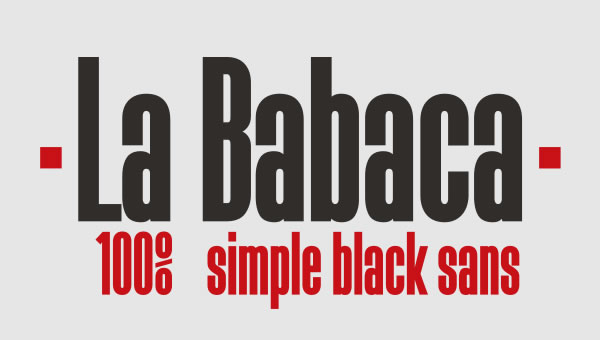
La Babaca and the Quiet Power of a Compressed Black Typeface
There is a certain type of font that does not shout, yet it demands attention. It occupies space with intention, drawing the eye without being loud. This is where La Babaca sits. It is a black typeface, meaning its weight is heavy and commanding, yet it is also compressed and built from simple geometric shapes. The slight bends at the ends of its strokes soften what could otherwise feel rigid. If you have ever struggled with a title that felt either too cramped or too airy, or a book cover that lacked personality without sacrificing readability, this typeface might be exactly what you have been looking for. Let's talk about where it fits, who benefits from it, and how it changes the way people interact with your work.
What makes La Babaca different from other bold fonts
Plenty of bold typefaces exist, but few combine compression with geometric simplicity and those distinctive terminal bends. Compression here means each character is narrow, allowing more text to fit into a horizontal space without reducing point size. The black weight gives it a solid, almost substantial presence on the page or screen. The geometric base keeps everything clean and modern. The bends at stroke ends introduce a human touch that prevents the font from feeling cold or mechanical.
This combination is rare. Most compressed fonts sacrifice readability for density. La Babaca does not. Because the shapes are simple and the bends guide the eye naturally, even large blocks of title text remain legible from a distance or at smaller sizes. This is not a font for body copy in most cases, but for headlines, pull quotes, and display work, it performs exceptionally well.
Magazine and editorial design: saving space without losing character
Magazine designers face a constant tension. They need headlines that grab attention, but they also have limited real estate. A cover or spread title must be large enough to be seen from across a newsstand, yet it cannot push other elements out of the layout. La Babaca solves this because its compressed nature means you can set it at a generous point size while still fitting the full headline into the available width.
Practical example: Imagine a feature article titled "The Future of Sustainable Architecture." In a standard sans-serif, that headline might require two lines at a display size, disrupting the visual hierarchy. With La Babaca, it fits on one line, allowing the designer to place a strong image above or beside it without overcrowding. The black weight ensures the words carry weight, and the bent terminals add a subtle, sophisticated detail that invites closer inspection.
For pull quotes inside articles, La Babaca works well because it contrasts sharply with body text. Readers naturally pause when they encounter a bold, compressed line, and the geometric clarity makes sure the quote is read, not just glanced over.
Book layout: where readability meets personality
Books present a different challenge. Titles need personality, but they also need to be readable at various sizes, from the dust jacket to the spine to the chapter opening. La Babaca shines here because it does not rely on decorative flourishes that might blur when scaled down.
Scenario: A nonfiction book about urban planning uses La Babaca for chapter titles. The compressed geometry echoes the density of city grids, and the black weight suggests authority. The terminal bends prevent the typography from feeling too clinical. Readers sense the alignment between the content and the typeface without consciously analyzing it.
For book spines, where space is extremely limited, La Babaca allows the title to be set large enough to read from a distance. This is a practical advantage in bookstores where spines compete for attention.
Graphic design and branding: a tool for distinct voice
Brands looking for a modern, confident identity often turn to geometric sans-serifs. La Babaca distinguishes itself by not being another neutral option. Its compressed proportions and terminal details give it a voice that suggests efficiency without harshness, strength without aggression.
Example: A small-batch coffee roaster wants a logo that feels artisanal but not fussy. La Babaca used for the brand name sets a tone of seriousness about craft. The black weight implies the boldness of dark roast, while the simple shapes keep the mark clean for use on bags, cups, and merchandise. The terminal bends add a hint of warmth, like a well-worn wooden counter.
Event posters, conference banners, and signage also benefit. Because La Babaca takes up less horizontal space, designers can use larger point sizes and maintain readability across long distances. A music festival lineup or a conference speaker list becomes much easier to scan.
Web and screen use: does it hold up?
Digital environments require careful consideration. La Babaca is primarily a display typeface, so its best use on screens is for main headings, hero text, and large callouts. At smaller sizes, the compression might make characters feel tight, especially on lower-resolution screens.
Practical observation: For a landing page headline, La Babaca creates immediate visual impact. The bold weight and narrow letterforms make the message feel urgent and important. It pairs well with a lighter, more spacious body font such as a regular weight sans-serif or a serif with generous tracking. The contrast between the dense headline and the airy body text guides the reader's attention naturally.
On mobile devices, the compressed quality is actually an advantage. A headline that might wrap to two lines in a wider font stays on one line with La Babaca, preserving the visual hierarchy on small screens. Just be mindful of letter spacing. Adding a small amount of tracking can improve readability without sacrificing the compressed look.
Who benefits most from using La Babaca
Different users will find different values in this typeface.
- Editorial designers working with tight grids and limited space will appreciate how La Babaca fits more text into narrow columns without reducing size.
- Brand identity creators looking for a font that communicates strength and clarity without being aggressive will find the geometric forms and terminal details useful.
- Self-publishers designing their own book interiors and covers can achieve a professional look without needing extensive typography training. The typeface does much of the work on its own.
- Poster and signage designers who need legibility at a distance will benefit from the black weight and simple shapes.
- Students and hobbyists exploring typography for the first time will find La Babaca forgiving because its strong character makes mistakes less obvious. A simple layout using this font often looks intentionally minimal rather than incomplete.
Strengths worth highlighting
The main strengths of La Babaca come down to space efficiency, visual weight, and readability. It is a typeface that does not need embellishment. It works with almost any layout style because its geometry is neutral enough to blend in, yet its terminal details keep it from being boring.
Another strength is its versatility across media. It prints well on uncoated paper because the shapes are simple and the weight is heavy. It also appears crisp on coated stock and digital screens when used at appropriate sizes.
Limitations to keep in mind
No typeface is perfect for everything. La Babaca is not suitable for long body text. Its compression and heavy weight make it tiring to read in paragraphs. Stick to using it for titles, headers, short quotes, and display purposes.
Another consideration: The terminal bends, while charming, might feel out of place in ultra-modern or minimalist contexts where pure geometric forms are preferred. If you are designing something that requires complete neutrality, a straight geometric sans might be a better choice.
Also, because La Babaca is compressed, it may not work well with languages that have many wide characters or diacritical marks. Check the character set before committing to it for multilingual projects.
How to pair La Babaca with other fonts
Pairing La Babaca is straightforward. Because it is heavy and dense, you want body fonts that are lighter and more open. A few combinations that work:
- A light or regular weight serif with generous x-height for a classic editorial feel.
- A clean, neutral sans-serif in a lighter weight for a modern, minimal aesthetic.
- A monospaced font for technical or code-related content, creating an interesting contrast in density.
Avoid pairing it with another display font, especially one that is also bold or compressed. The result will feel chaotic rather than intentional.
Final thoughts before choosing La Babaca
If you are selecting a typeface for a project, think about what you want the text to communicate. La Babaca says efficiency, confidence, and subtle craft. It does not scream for attention, but it holds it when given. It saves space without compromising readability, and it adds personality without becoming a distraction.
For anyone designing titles, covers, posters, or brand marks, this typeface deserves a spot in your toolkit. Try it at large sizes first. See how it changes the rhythm of your layout. Notice how the bends at the ends of the strokes soften the overall impression. That is the quiet power of La Babaca: it works hard so you do not have to, and it does so with a character that is entirely its own.