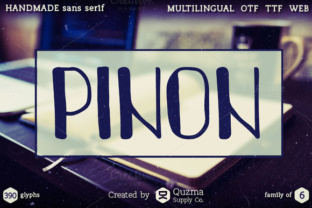
Pinon: A Handmade Sans Serif Font for Strategic Brand Communication
Typography is one of the most powerful yet underutilized tools in branding, marketing, and creative communication. The font you choose does more than convey words—it sets the emotional tone, reinforces your positioning, and influences how your audience perceives your message. In a crowded visual landscape, making deliberate typographic decisions can mean the difference between blending in and standing out. Pinon, a handmade sans serif font, offers a distinct blend of vintage character and playful energy. But like any tool, its value depends entirely on how intentionally you use it. This article explores what Pinon is, why it may be strategically useful for your goals, and how to approach it with a clear plan to achieve better long-term results.
Why Font Choice Matters for Your Goals
Every decision you make about your brand’s visual identity shapes the way customers, clients, or readers experience your work. Fonts carry subtle psychological cues. A clean, geometric sans serif might communicate efficiency and modernity, while a detailed serif can suggest tradition and authority. Pinon sits in a more nuanced space. Its handmade quality introduces an element of humanity and imperfection that feels personal, approachable, and nostalgic. For entrepreneurs and marketers looking to differentiate their brand in a world of polished corporate aesthetics, this can be a deliberate advantage. When your goal is to build emotional connection, foster trust, or create memorable visual touchpoints, choosing a font with personality like Pinon supports that objective—provided it aligns with your broader positioning.
Understanding Pinon’s Character and Capabilities
Pinon is a handmade sans serif typeface that draws inspiration from vintage signage and playful lettering traditions. Its irregular edges, varied stroke widths, and slightly uneven baseline give it a hand-drawn feel that no standard digital font can replicate. This authenticity is exactly what makes it useful for projects that aim to feel artisanal, small-batch, or deliberately unpolished. It works especially well in settings where you want to evoke a sense of history, craftsmanship, or casual warmth. However, because of its strong personality, Pinon is not a neutral workhorse. It makes a statement. That statement needs to be consistent with your brand voice and the specific context in which it appears.
In practical terms, Pinon includes a full set of uppercase and lowercase characters, numerals, and punctuation, making it viable for both display and short-form text. The font’s design ensures legibility at larger sizes, which is why it shines in headings, logos, posters, and covers. At smaller sizes or in dense paragraphs, its handmade quirks can sometimes reduce readability, so careful planning is required. Knowing these limitations from the outset helps you make informed decisions rather than forcing a font into roles it wasn’t built for.
Strategic Applications Across Business and Creative Work
The most effective use of Pinon happens when you pair its visual personality with a clear goal. Here are several high-value applications where this font can help you achieve specific outcomes:
Branding and Logo Design
If your brand positions itself as artisanal, local, nostalgic, or playful, Pinon can reinforce that identity at every touchpoint. A logo set in Pinon immediately communicates a handcrafted ethos. For a bakery, a vintage clothing line, a family-run restaurant, or a creative consultancy, this choice signals that you value authenticity over mass production. In logo applications, consider using Pinon for the primary wordmark and complementing it with a simpler, neutral font for supporting text to maintain balance.
Invitations and Greeting Cards
Events that thrive on personal connection—weddings, birthday parties, product launches, or community gatherings—benefit from typography that feels inviting and warm. Pinon’s playful curves and vintage roots make it a natural fit for invitations and greeting cards. It gives recipients a sense of occasion before they even read the details. For digital or printed invitations, pairing Pinon with subtle illustrations or minimal ornamentation can elevate the overall design without overwhelming the message.
Posters and Signage
Because Pinon is designed with signs in mind, it performs exceptionally well at large sizes. Use it for promotional posters, event banners, or window displays where you have limited time to capture attention. The font’s handmade quality makes the message feel immediate and human, which can increase engagement in physical spaces. For a coffee shop announcing a live music night or a boutique announcing a sale, Pinon can create a sense of occasion that drive-through customers linger on.
Book Covers and Brochures
In publishing and collateral design, the cover is the first decision point for your audience. A book cover that uses Pinon can signal a story that is warm, personal, or set in a past era. Similarly, brochures for local services or artisan products can use Pinon for headlines to break away from sterile templates. When using Pinon in longer printed materials, reserve it for titles, section headers, and callout quotes. Let a clean, highly readable secondary font handle the body copy. This approach preserves legibility while injecting personality exactly where it counts.
Planning Your Use of Pinon: When and Where It Works
Good typography is rarely a spur-of-the-moment decision. To get the most out of Pinon, take time to evaluate your specific project goals and constraints. Begin by asking yourself: Does the visual tone of this font align with the core message I want to communicate? If your brand relies on authority, precision, or luxury, Pinon’s playful vintage vibe may dilute that message. On the other hand, if you are targeting an audience that values authenticity, community, or creative expression, Pinon becomes a strategic ally.
Next, consider the medium. Pinon’s handmade textures render beautifully in print, especially on uncoated papers or textured stocks that enhance its organic feel. On digital screens, ensure that the font is used at sizes where its character remains legible. Avoid using it in body text for websites or long emails. Instead, deploy it in hero sections, slide titles, or social media graphics where the audience sees it briefly and at a larger size.
Planning also involves pairing. Pinon works well with clean, neutral sans serifs (like Montserrat or Open Sans) to create contrast. A pairing strategy gives you visual hierarchy—Pinon for impact, a secondary font for information. Test combinations before committing, and always ask a colleague or designer for feedback on whether the pairing feels intentional or chaotic.
Considering the Risks of Misaligned Typography
Using a distinctive font like Pinon without a clear strategy can create more problems than it solves. One common mistake is applying it to every project simply because you like the look. Overusing a font with strong personality can dilute its impact and make your brand feel inconsistent. When Pinon appears in contexts that contradict its tone—such as a serious legal document or a high-tech product interface—it can confuse or alienate your audience.
Another risk is sacrificing readability for style. If you force Pinon into small sizes or dense paragraphs, readers may struggle to scan the text, hurting comprehension and user experience. This can directly undermine your communication goals, especially in time-sensitive materials like brochures or web content. Always test your layout at the actual size and medium you intend to use. If readability suffers, reserve Pinon for display roles and use a more legible font for body copy.
Finally, consider licensing and file formats. Pinon may come with specific usage rights depending on where you obtain it. Failing to comply with license terms can lead to legal issues or the need to redesign materials later. Before embedding Pinon into a website or using it in a commercial product, confirm that your license covers that usage.
Practical Steps for Integrating Pinon Intentionally
To make Pinon work for your goals, follow a deliberate process rather than relying on intuition alone. Start by defining the primary purpose of the typography in your project. Are you trying to attract attention, build trust, evoke nostalgia, or differentiate from competitors? Write down that purpose and keep it visible as you design.
- Audit your current brand materials: Look for places where a font with Pinon’s qualities would strengthen your existing identity. This could be your primary logo, campaign headers, or social media templates.
- Create a usage guide: Document when and where to use Pinon—for example, only in headings above 18pt, or only in printed invitations. A simple guide prevents team members or future collaborators from misapplying it.
- Test across media: Print a sample header on the paper you plan to use. Screenshot a social media post with Pinon at different device sizes. Adjust sizing or letter-spacing as needed.
- Get feedback from your target audience: Show two versions of a design—one using Pinon, one using a neutral font. Ask which feels more aligned with your brand message. The answer will inform whether Pinon supports your positioning.
- Evaluate the long-term cost: If your brand scales, will Pinon still work across new product lines or digital experiences? Plan for flexibility. If your brand evolves, you may need to revisit the choice, so choose with future growth in mind.
By following these steps, you avoid using Pinon as a decorative afterthought. Instead, you deploy it as a deliberate element of your communication strategy, aligned with your goals and audience expectations.
Long-Term Value: Consistency and Recognition
Typography is an investment in brand equity. When you choose a font like Pinon and apply it consistently across your materials, it becomes a recognizable part of your visual identity. Over time, audiences begin to associate that specific handmade quality with your brand’s personality. That recognition builds trust and loyalty, especially in markets where authenticity is valued.
For small business owners and freelancers, consistency is often more important than any single design decision. Using Pinon across your logo, website headers, business cards, and social media templates creates a cohesive experience that signals professionalism and thoughtfulness. Even if you hire outside designers later, having a clear typographic direction saves time and ensures your brand remains on strategy.
However, consistency does not mean rigidity. As your projects diversify, you may choose to use Pinon in some contexts and not others. That flexibility is fine, as long as the decision is driven by your communication goals rather than convenience. For instance, a formal proposal might omit Pinon entirely, while a product launch campaign centers on it. Both choices can be correct if they serve their respective objectives.
Final Thoughts on Using Pinon as a Strategic Tool
Pinon is more than a decorative font. It is a design asset that, when used deliberately, can enhance your brand’s storytelling, differentiate your products, and improve customer experience. Its handmade sans serif character brings warmth and vintage charm to any project, but only when it aligns with your overall positioning and the practical demands of your medium.
Treat Pinon as you would any strategic resource. Define your goals, understand the context, plan its application, and test the results. Avoid the temptation to use it everywhere simply because it looks appealing. Instead, reserve its distinctive voice for moments where you want to make an impression—where authenticity and personality matter most.
By approaching Pinon with intention, you turn a simple typeface into a powerful instrument for achieving your creative and business outcomes. Whether you are designing a logo, writing a blog header, or planning a full brand identity, let your strategy guide your choice, not the other way around. That is how you build communication that resonates now and over the long term.