Lady in Red: Evaluating a Rough, Bold Font for Your Design Projects
Typography choices shape how an audience perceives a message before they read a single word. Among the many display typefaces available today, Lady in Red stands out as a rough, bold font that carries an unmistakable sense of energy. Its unpolished edges, thick strokes, and assertive presence make it a tool for designers who need to command attention. But like any specialized typeface, it comes with strengths and limitations. This article offers a balanced look at what Lady in Red is, when it works well, and when alternatives might serve you better.
Whether you are a graphic designer, a branding professional, or a hobbyist selecting type for a personal project, understanding the tradeoffs of this font helps you make an informed decision. Below, we explore the character of Lady in Red, practical considerations for its use, and concrete scenarios where it either shines or falls short.
What Is Lady in Red?
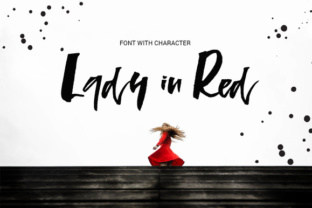
Lady in Red is a display typeface defined by its rough, bold letterforms. Its strokes appear deliberately distressed — as though stamped, scratched, or weathered — giving it a tactile, imperfect quality. Despite its rugged appearance, the font maintains strong legibility for short phrases and headlines because of its generous weight and clear contours.
This font typically includes both uppercase and lowercase characters, basic punctuation, and often a set of numerals. Some versions also offer alternate glyphs or ligatures that enhance the handcrafted feel. It is not a text face intended for long paragraphs; instead, it is designed for impact at larger sizes.
The "energy" often associated with Lady in Red comes from its visual tension — the contrast between its bold solidity and its ragged edges. This duality makes it feel simultaneously strong and raw, which can communicate authenticity, grit, or rebellion depending on context.
Why Someone Might Consider Lady in Red
People are drawn to Lady in Red for several reasons, many of which relate to its distinctive personality. Here are common motivations for exploring this font:
- To create immediate visual impact. When a headline or poster must stop a viewer mid-scroll, a rough, bold face can deliver that jolt.
- To convey a handcrafted or artisanal feel. The distressed edges suggest something made by hand, not machine, which fits rustic, vintage, or DIY aesthetics.
- To match an edgy or rebellious tone. Music posters, alternative brands, and event graphics benefit from type that feels unrefined and energetic.
- To break away from polished, corporate typography. Designers seeking contrast in a layout may use Lady in Red to inject personality and unpredictability.
- To add texture to a design. In minimalist layouts, a rough font introduces a tactile layer that flat sans-serifs cannot provide.
These motivations are valid, but each comes with tradeoffs that deserve careful thought before committing to this typeface for a project.
Benefits
Lady in Red offers several practical advantages when used deliberately:
- Strong personality. Few typefaces convey raw energy as directly. If your message needs to feel urgent, passionate, or grounded, this font supports that tone without extra embellishment.
- Effective at large sizes. Its bold weight and rough edges remain clear and readable even when scaled up for banners, billboards, or event signage.
- Good for short copy. For headlines, titles, logos, or callout phrases, Lady in Red holds attention and creates a focal point.
- Versatile in distressed contexts. It pairs naturally with photography, vintage illustrations, grunge textures, and hand-drawn elements.
Tradeoffs
However, the same qualities that make Lady in Red compelling also create limitations:
- Low legibility at small sizes. The distressed edges can blur together when the font is reduced below 24–30 points, making it unsuitable for body text or fine print.
- Narrow emotional range. This font communicates a specific mood — roughness, urgency, informality. It is not appropriate for professional, elegant, or serene contexts.
- Potential for overuse. Because of its strong character, Lady in Red can overwhelm a layout if used too broadly or paired with competing visual elements.
- Limited character set in some versions. Not all variants include extended Latin characters, fractions, or currency symbols, which may matter for multilingual projects.
- Tonal mismatch risk. Using a rough font for a polished brand or a sensitive topic can appear careless or gimmicky rather than intentional.
Understanding these tradeoffs helps you evaluate whether Lady in Red supports your communication goals or undermines them.
Considerations Before Using Lady in Red
Before selecting Lady in Red, consider the following factors that influence its effectiveness:
Context and Audience
Who will see this typeface, and what expectations do they bring? A youthful audience for a music festival might respond positively to the bold, rough energy. A corporate board reviewing annual report materials likely will not. Match the font's personality to your audience's frame of reference.
Pairing with Other Fonts
Lady in Red acts as a display face, so it needs a neutral companion for body text. A simple sans-serif like Open Sans, Lato, or Montserrat can balance the rawness. Avoid pairing it with another decorative font, as the result can feel chaotic. The contrast between a clean body face and a rough display face often strengthens the overall design.
Color and Background
The distressed edges of Lady in Red show best against solid, light backgrounds. Dark or complex backgrounds can obscure the rough details, reducing the font's intended texture. Also, consider using it in red tones — as its name suggests — to reinforce the energy, though black, white, or metallic colors also work.
Licensing and Usage Rights
Lady in Red is available from various foundries and marketplaces, with different licenses. Check whether the version you intend to use permits commercial use, web embedding, or modification. Free versions may have restrictions. Always verify before finalizing a project.
Where Lady in Red Is a Strong Fit
Certain design situations align naturally with the characteristics of Lady in Red. These include:
- Music and event posters. Concert flyers, festival branding, and club night graphics benefit from the raw, energetic tone.
- Merchandise and apparel. T-shirt graphics, tote bags, and stickers that aim for a streetwear or handcrafted look pair well with this font.
- Restaurant or bar menus. Establishments with a rustic, industrial, or vintage theme can use Lady in Red for headings to reinforce the atmosphere.
- Branding for small, independent businesses. Artisans, breweries, coffee roasters, and tattoo shops often seek typefaces that feel personal and unpolished.
- Social media graphics. Short, punchy posts — especially for announcements or calls to action — can stand out when set in Lady in Red against a minimal background.
- Packaging for niche products. Limited-edition items, handmade goods, or products with a retro or rebellious identity can benefit from the font's tactile quality.
In these contexts, Lady in Red does not merely decorate — it reinforces the message and creates a cohesive visual identity.
Where Alternatives May Be Worth Considering
There are also clear scenarios where Lady in Red likely is not the best choice. Alternatives may serve you better if you need:
- Long-form readability. For articles, reports, or books, use a clean serif or sans-serif text face. Lady in Red cannot sustain readability beyond a few words.
- A professional or authoritative tone. Corporate communications, legal documents, or academic materials demand neutral, polished typography.
- Elegant or refined aesthetics. Luxury brands, weddings, and formal invitations call for delicate or classic typefaces, not rough ones.
- Multilingual support. If your content includes diacritics, non-Latin scripts, or special symbols, verify whether your chosen version of Lady in Red covers them.
- Subtlety or restraint. When the design requires the typography to recede rather than dominate, Lady in Red may overpower the composition.
- Digital interfaces or mobile screens. At small sizes on low-resolution screens, the distressed details can become muddy, harming usability.
In these cases, consider a neutral display face, a clean sans-serif, or a restrained serif instead. The decision should always serve the content and the audience first.
Practical Decision-Making Insights
To determine whether Lady in Red aligns with your goals, ask yourself these questions:
- What emotion must the typography evoke? If the answer includes energy, grit, authenticity, or rebellion, Lady in Red is a candidate. If the emotion is calm, trustworthy, or sophisticated, look elsewhere.
- Where will the font appear? Large formats like posters, headlines, and logos are ideal. Small or screen-based applications are risky.
- Who is the audience? Younger, design-aware, or niche audiences tend to accept rough typography. Broader or older audiences may find it distracting.
- How will this font pair with others? Plan a neutral companion face before committing. If you cannot find a suitable pairing, reconsider the choice.
- Is the design meant to last? For ephemeral projects like event posters, Lady in Red works well. For long-term branding, test whether the rough aesthetic remains effective over time.
These questions reframe the decision from "Do I like this font?" to "Does this font serve my communication purpose?" That shift leads to more consistent, effective design outcomes.
Final Evaluation: Does Lady in Red Belong in Your Project?
Lady in Red is a rough, bold font packed with energy — but energy alone does not guarantee a good fit. Its strength lies in short, impactful applications where the audience expects or welcomes an unpolished, assertive voice. It fails when used in contexts that demand clarity, neutrality, or elegance.
If your project involves event branding, independent merchandise, rustic environments, or any setting where raw authenticity matters, Lady in Red deserves a close look. If your goal is readability, professionalism, or broad appeal, alternatives will serve you better.
The most successful typography decisions come from balancing aesthetic appeal with functional requirements. By evaluating Lady in Red through the lens of your specific audience, medium, and message, you can decide whether its rough bold energy amplifies your work or distracts from it. In the right hands and the right context, this font can be a powerful tool. In the wrong context, it is simply noise. Know your project, know your audience, and choose accordingly.