The Trickster: A Practical Review of the Font Duo with Swashes, Alternates, and Brushes
Choosing the right typeface often determines whether a design lands with impact or gets lost in the noise. For professionals who regularly work with branding, packaging, or editorial layouts, a font that offers both personality and flexibility is a genuine asset. The Trickster is one such resource—a detailed font duo that delivers two distinct versions of the same core design. One version includes elaborate swashes and swooshes, while the other provides a clean, regular counterpart. With a generous set of alternates and accompanying brushes, this typeface aims to give designers creative freedom without forcing them to piece together extra assets from separate sources. This article evaluates what The Trickster offers, how it performs in real-world use, and whether it deserves a place in your toolkit.
What Exactly Is The Trickster?
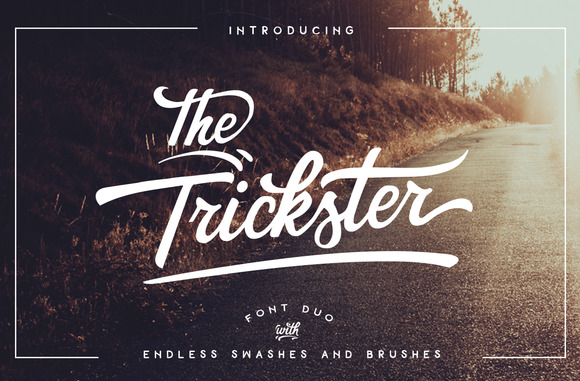
At its simplest level, The Trickster is a two-in-one font package. The design centers on a single letterform style that appears in two variations: a richly ornamented version and a standard one. The ornamented iteration includes built-in swashes, swooshes, and decorative flourishes that attach to or flow from the characters. The regular version strips away those embellishments, leaving a clean, readable base that works well for body text or minimalist headings.
Beyond the two core fonts, The Trickster also ships with a set of alternate glyphs. These alternates let you swap out default letters for more stylized versions, giving you further control over the final look. The package additionally includes brush assets, which are pre-made decorative strokes that complement the font’s aesthetic. All of this is wrapped in a PUA (Private Use Area) encoded file, meaning the alternates and swashes are accessible directly through the glyph panel of most design applications without requiring additional software or workarounds.
Aesthetic personality
The Trickster leans toward a handcrafted, slightly whimsical style. The letterforms have a natural, unpolished quality that suggests brush strokes or hand-lettering rather than rigid geometric construction. This gives the typeface a human, approachable feel that works well for projects aiming to convey creativity, warmth, or a handcrafted sensibility. The swashes and swooshes in the ornamented version are neither overly delicate nor aggressively bold; they sit comfortably as decorative elements that enhance readability rather than overshadow it.
Two versions, one cohesive system
The dual-version structure is where The Trickster shows practical intelligence. The regular version serves as a reliable workhorse for subheadings, captions, or short paragraphs. The ornamented version, by contrast, shines in hero headlines, logos, and display uses where the extra flourishes add character. Because both versions share the same underlying letterform proportions, you can pair them within a single layout without visual dissonance. This consistency saves time during layout design and keeps the overall look coherent.
Alternates and brushes
The alternate glyphs extend the versatility further. For example, you might replace a standard "A" or "R" with a looped or swashed alternate to create a unique signature for a logo or heading. The included brushes, which are separate image or vector assets, provide additional decorative elements such as underline strokes, dividers, or accent marks. While not part of the font directly, these brushes integrate well with the typeface’s style and can reduce the need to create matching ornaments from scratch.
PUA encoding and application compatibility
One of the stronger technical merits of The Trickster is its PUA encoding. This ensures that all alternates, swashes, and special characters are accessible through the Glyph panel in applications like Adobe Illustrator, Photoshop, InDesign, Procreate, and even some word processors. For designers accustomed to digging through glyph sets to find the right alternate, this convenience is a genuine time-saver. It also means you won’t need to memorize complicated keyboard shortcuts or install separate font files for each alternate style.
Workflow integration
Installing The Trickster is straightforward. Once the font files are placed in your system’s font directory, they appear in the font menu of any compatible application. Switching between the regular and ornamented versions is as simple as selecting the variant from the font dropdown. The brush assets, depending on the format supplied, can be imported as brushes in raster or vector applications. In practice, the entire package feels designed to minimize friction during the design process. You do not need to piece together swashes from external libraries or manually align decorative elements.
Language and character set
While the font covers standard Latin characters, punctuation, and numerals, it is best suited for English and Western European language projects. Users working with extended character sets (Cyrillic, Greek, or non-Latin scripts) may find support lacking. Additionally, the ornamented version, by its nature, may not render well at very small sizes. For fine print or dense body copy, the regular version is the safer choice.
Real-World Applications and Use Cases
The Trickster is not a neutral, all-purpose typeface. It has a distinct personality that makes it most effective in contexts where creativity, informality, or handcrafted aesthetics are appropriate. The following applications demonstrate where the font duo delivers the most value.
Branding and logo design
Small business owners, freelancers, and entrepreneurs developing a visual identity will find The Trickster particularly useful. The ornamented version can form the centerpiece of a logotype, while the regular version handles supporting text like taglines or contact details. The alternates allow for a customized logotype that feels unique without requiring custom lettering from scratch. For coffee shops, boutiques, creative studios, or lifestyle brands, the font’s personality aligns well with a crafted, artisanal image.
Invitations and event materials
Wedding invitations, party flyers, event programs, and greeting cards benefit from the decorative flourishes in The Trickster. The swashes add elegance without the formality of more traditional script fonts. Using the regular version for body details and the ornamented version for headings creates a clear hierarchy while maintaining a consistent look. The included brushes can also serve as corner ornaments or dividers, further unifying the layout.
Social media and digital content
Bloggers, content creators, and social media managers who need distinctive headlines for Instagram posts, Pinterest pins, or YouTube thumbnails can leverage The Trickster for high visual impact. The ornamented version works especially well as an overlay on images or as part of a branded template. Because the font is PUA encoded, extracting specific swashes for use as separate graphic elements is also possible, giving you flexibility when compositing digital assets.
Packaging and product labels
For small-scale product packaging (skincare, candles, food products, or handmade goods), The Trickster offers a handcrafted feel that resonates with consumers looking for authentic, small-batch items. The ornamented version can serve as a primary brand marker on the front label, while the regular version handles ingredient lists or descriptive copy on the back. The brush assets can also be used to create custom seals, stamps, or accent graphics.
Editorial and print layout
Magazine spreads, zines, lookbooks, and brochures with an artistic or bohemian editorial direction can incorporate The Trickster for pull quotes, section headers, or drop caps. The regular version provides enough legibility for short text blocks, while the ornamented version adds visual interest at key points. That said, the font is not suitable for large bodies of text. Its hand-drawn nature reduces reading speed at smaller sizes, so it should be reserved for display and accent roles.
Who Benefits Most from The Trickster?
Based on its design and feature set, The Trickster is best suited for the following groups:
- Freelance graphic designers and illustrators who need a versatile font duo for client projects that demand a handcrafted, approachable look.
- Small business owners and entrepreneurs building a brand on a budget. The included alternates and brushes reduce the need to purchase additional decorative assets.
- Bloggers and content creators who want to differentiate their visual content with a distinctive typeface that works both on-screen and in print.
- Event planners and invitation designers working on weddings, parties, or special occasions where decorative type adds atmosphere.
- Packaging designers focusing on artisanal, handmade, or boutique products where the typeface reflects the product’s character.
- Educators and hobbyists experimenting with type design or learning how to integrate alternate glyphs and swashes into their projects.
Conversely, The Trickster is less suitable for corporate branding, legal documents, scientific publications, or any context requiring strict neutrality, high readability at small sizes, or broad language support. It is a specialty typeface, not a universal solution.
Strengths
- Dual-version flexibility: Having an ornamented and regular variant in one package simplifies design decisions and ensures visual consistency.
- PUA encoding: Access to alternates and swashes is straightforward and does not require extra software or workarounds.
- Included brushes: The brush assets extend the typeface’s utility beyond letterforms, aiding in layout decoration.
- Distinct personality: The handcrafted style brings warmth and authenticity to projects that call for it.
- Customizability: Alternates allow for a level of personalization that makes each use feel less generic.
Limitations
- Limited language support: Best suited for Latin-based Western European languages; not ideal for multilingual projects.
- Display-only utility: The ornamented version does not perform well at small sizes or in dense body copy.
- Specific aesthetic: The handcrafted, whimsical style will not fit every brand or project. It is not a neutral or corporate typeface.
- Brush asset integration: Depending on the format, brushes may require some adjustment to match the font’s weight and scale exactly.
Long-Term Value and Recommendation
The Trickster holds its value well for designers and small business owners who regularly work in the creative, lifestyle, or event spaces. The dual-version structure and alternate glyphs extend the typeface’s lifespan across multiple projects, and the PUA encoding ensures compatibility with current design software. While the brush assets are a nice addition, the core value lies in the combination of the two font variants and the alternate set.
If you already own a robust library of decorative typefaces, The Trickster may overlap with existing tools. But if you need a single font duo that balances ornamentation with practicality, and if your work frequently calls for a handcrafted, approachable aesthetic, this package offers a solid return on investment. Test the font at various sizes and in your primary applications before committing, particularly if your workflow involves heavy multilingual typesetting or very small text.
In a market saturated with either overly complex font families or overly simple display faces, The Trickster occupies a useful middle ground. It gives you the decorative flare to make projects memorable, while the regular version keeps your layouts grounded and readable. For the right audience and the right projects, it is a genuinely practical asset.