Emerald: A Brush Font with a Dancing Baseline and Distinct Character
Brush fonts occupy a specific space in typography. They aim to capture the energy of hand-lettering while offering the repeatability and convenience of a digital typeface. Many fall short, either by feeling too rigid or too chaotic. Emerald takes a different approach. It is a brush font that introduces a dancing baseline and offers unique variations of lowercase letters. These features make it worth a closer look for anyone who works with display type, branding, or editorial design. This article examines what Emerald offers, how it performs in real projects, and who stands to benefit most from its particular strengths.
What Sets Emerald Apart: A Dancing Baseline and Letter Variations
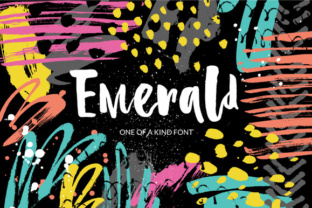
The most noticeable feature of Emerald is its dancing baseline. Instead of sitting on a perfectly straight line, the letters rise and fall subtly as they would in natural handwriting. This movement creates a sense of rhythm and spontaneity that is difficult to achieve with standard script or brush fonts. The effect is not extreme. It is controlled enough to remain readable, but present enough to give text a lively, hand-drawn feel.
In addition to the baseline, Emerald includes multiple variations of certain lowercase letters. This means the same character can appear in slightly different forms within a single word or sentence. When used with OpenType-aware software, these alternates activate automatically or can be selected manually. The result is text that avoids the repetitive look of many digital fonts. Words appear more organic, as if written by hand with natural variation in letterforms. This combination of a moving baseline and letter alternates gives Emerald a level of authenticity that many brush fonts lack.
Key Characteristics and Design Quality
Emerald is a brush font, and its strokes reflect that origin. The letterforms have a textured edge, a variable stroke width, and a diagonal stress that mimics the pressure and angle of a brush pen. The overall impression is casual but deliberate. It is not a rough or distressed font. The brush effect is clean, which makes it suitable for both digital and print applications.
The glyph set is practical. It includes uppercase and lowercase letters, numerals, punctuation, and basic ligatures. The dancing baseline is consistent across the entire character set, which is important for maintaining visual harmony in longer text passages. The lowercase variations add depth without confusing the reader. In practice, the font reads well at display sizes and remains functional at medium sizes for shorter paragraphs.
One notable aspect of Emerald is its balance between expressiveness and legibility. The dancing baseline could easily become distracting, but it is restrained enough that the eye adjusts quickly. The letter alternates are distributed naturally, so no single word feels like a collection of mismatched forms. This suggests careful design work behind the scenes.
Real-World Performance and Practical Value
Testing Emerald in a variety of applications reveals its strengths and limitations. In branding contexts, such as logos, product labels, or packaging, the font adds a human touch. A coffee brand, a handmade soap line, or a boutique bakery could all benefit from the warmth and informality it conveys. The dancing baseline gives these applications a sense of motion and authenticity that standard scripts cannot replicate.
In editorial use, Emerald works well for headings, pull quotes, and short callouts. It can add contrast to a layout dominated by clean sans-serif or classic serif body text. For longer text, however, the dancing baseline and brush texture can become tiring to read. This is not a body font. It is a display font meant for short bursts of text where its character can shine without overwhelming the reader.
Web use requires some consideration. The font loads well as a webfont, and the OpenType features function correctly in modern browsers. For critical branding elements, it may be wise to test how the dancing baseline appears at different screen sizes. On smaller screens, the baseline variation is less noticeable, but the letter alternates still contribute to a natural feel. Performance is typical for a display webfont; there is no significant load time penalty if the file is served properly.
Print performance is generally excellent. The brush texture reproduces well at standard resolutions, and the baseline variation adds a tactile quality to printed materials. Business cards, invitations, posters, and signage are all suitable use cases. The font retains its character even at larger sizes, which is important for headlines and titles.
Who Benefits Most from Emerald
Emerald is most valuable for professionals who need a distinctive display typeface with a hand-crafted feel. Graphic designers working on brand identities for artisanal or lifestyle businesses will find it immediately useful. The font communicates care, individuality, and a personal touch that aligns well with small-batch products, creative services, and local businesses.
Freelancers and sole proprietors who design their own marketing materials can also benefit. A logo or social media graphic set in Emerald can differentiate a personal brand from competitors who rely on generic system fonts. Bloggers and content creators who want a recognizable header style may find that Emerald gives their site a consistent, approachable identity.
Print-focused projects such as greeting cards, wedding invitations, and event flyers are a natural fit. The font's informality and warmth make it suitable for personal and celebratory contexts. Educators and hobbyists who produce worksheets, posters, or classroom materials may also appreciate its readability at display sizes and its engaging visual character.
Emerald is less suited for corporate branding, formal documents, or projects that require neutral or strictly professional typography. Its personality is strong, and that personality will dominate whatever it is applied to. This is not a limitation; it is a design choice. Users should evaluate whether that personality aligns with their message and audience before committing.
Usability, Flexibility, and Consistency
Installing and using Emerald is straightforward. It works with standard design software that supports OpenType features, including Adobe Creative Suite, Affinity products, and web-based tools like Canva or Figma (with appropriate licensing). The font file includes the necessary OpenType tables to enable the dancing baseline and letter alternates automatically. Users who prefer manual control can access alternate glyphs through the Glyphs panel or character map.
Flexibility is moderate. The font comes in a single weight by default. Some users may wish for a lighter or bolder variant for hierarchy purposes. In practice, the single weight works well when paired with a contrasting sans-serif or serif font for body text. The consistency of the brush style across all characters is high. There are no letters that feel out of place or poorly constructed. This reliability is important for professional work where every detail matters.
Long-term value depends on the user's need for a brush font with a distinct voice. Emerald is not a general-purpose typeface. It is a specialized tool. For those who regularly create materials that benefit from a hand-drawn, warm, and lively look, it will remain useful for years. For others, it may find occasional use in specific projects. The quality of the design and the OpenType features suggest that it will not feel dated quickly.
Realistic Examples and Practical Recommendations
Consider a small business owner launching a line of organic tea. The logo set in Emerald could convey the handmade nature of the product and the care behind it. The dancing baseline would suggest a natural, unprocessed quality that standard fonts cannot match. Paired with a clean sans-serif for the tagline and packaging copy, the result would be cohesive and memorable.
For a freelance illustrator updating their portfolio site, using Emerald for section headers could create a warm, inviting tone. The letter variations would prevent the headers from feeling mechanical, which aligns well with an artistic portfolio. The same font used on business cards and social media headers would maintain a consistent visual identity.
A wedding invitation suite could use Emerald for the couple's names and key details. The informal elegance of the brush style suits many wedding aesthetics, from rustic to modern. The dancing baseline adds a romantic, handwritten quality without sacrificing readability. For the ceremony details, a smaller size in a complementary serif would maintain the hierarchy.
In each case, the recommendation is to use Emerald for short, prominent text. Limit it to display sizes and pair it with a neutral or complementary typeface for body copy. Avoid using it for long paragraphs or small text. Test how it appears on the intended medium, especially for web use. These practices will help users get the most out of the font while avoiding common pitfalls.
Possible Limitations and Considerations
No typeface is without trade-offs. Emerald has a strong personality, which may not suit every project. It is not a font for conservative or formal contexts. The dancing baseline, while restrained, may still be too active for some readers or applications. For example, a financial services website or a legal document would be inappropriate uses.
The single weight is a limitation for projects that require typographic hierarchy within the same typeface. Users will need to pair Emerald with another font for contrast. The lack of italics or small caps is not unusual for a brush font, but it is worth noting for those accustomed to more extensive type families.
Licensing should be confirmed before use. Like all commercial fonts, Emerald requires proper licensing for web, print, and app use. Some foundries offer different licensing tiers. Users should verify that their intended use is covered, especially for branding and commercial projects.
Finally, the font relies on OpenType features for its key functionality. Older software or basic word processors may not support these features, which means the dancing baseline and letter alternates may not appear. Users should ensure their workflow includes tools that can render the font as designed.
Emerald is a well-crafted brush font that delivers on its promise of a dancing baseline and unique lowercase variations. It offers a genuine hand-drawn feel that works well in branding, editorial display, and personal projects. Its strengths are most apparent when used intentionally for short, prominent text in contexts that value warmth and individuality. For professionals who need that kind of character, Emerald is a reliable and effective choice. For those who need neutral or formal typography, it may not be the right fit. Understanding that distinction is the key to using Emerald well.