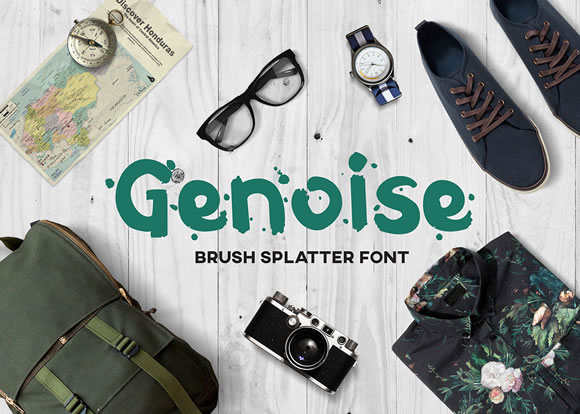
Genoise: A Handmade Brush Font with Splatter
Some fonts whisper. Others shout. Genoise, a handmade brush font infused with genuine splatter marks, does something in between—it feels alive. Designed by Milena Gajovic, this typeface carries the energy of wet ink hitting paper, with each stroke appearing slightly unpredictable. That unpredictability is exactly what gives Genoise its appeal across many creative fields.
Whether you are building a brand, teaching a design workshop, or simply looking for a font that breaks away from sterile digital perfection, Genoise offers something tactile in a screen-driven world. This article explores who might find Genoise useful, why different people value it for different reasons, and how to decide if it fits your next project.
What Makes Genoise Stand Out
Genoise is not a standard script font. It is a brush font that has been drawn by hand, letter by letter, and then enriched with splatter details. The result is a texture that mimics real paint application—tiny droplets, uneven edges, and slight variations in stroke thickness. This handmade quality matters because it adds warmth and authenticity to text.
From a practical standpoint, Genoise works best as a display font. It is ideal for headlines, logos, posters, and any short text where personality is key. It is less suited for long body copy, but that is not its purpose. The font comes in a single style with standard characters, numerals, and basic punctuation. Its handcrafted nature means no two uses will feel identical, even when repeating the same letters.
Who Can Benefit from Genoise
Different audiences will look at Genoise through different lenses. Below are perspectives you might recognize, along with real-world examples that show how the font can serve distinct goals.
For Graphic Designers and Creatives
If you are a designer, your priority is often originality and visual impact. Genoise offers a hand-painted look that can save hours of custom brush work. Instead of creating splatter effects from scratch, you can drop Genoise straight into a layout and get instant texture.
Use case scenario: You are designing a poster for a live music event. The band plays raw, acoustic sets in small venues. A clean, vector font would feel too polished. Genoise, with its uneven brush strokes and scattered ink drops, echoes the intimate, imperfect nature of the performance. You pair it with a muted background color and minimal graphics—the font does the heavy lifting.
For designers who work in branding, Genoise can help create a rustic or artisanal feel. A coffee shop logo, a craft beer label, or a hand-lettered quote for social media all benefit from the font’s organic imperfections. The splatter marks can even inspire other design elements, like textures or patterns.
For Marketers and Brand Managers
Marketers care about message clarity and brand consistency. But they also need to evoke emotion. Genoise can be a tool for storytelling when the brand voice is friendly, handmade, or rebellious.
Use case scenario: You are launching a small-batch skincare line. The packaging uses recycled paper and minimal inks. Your tagline, “Made slowly, for real skin,” needs a font that reflects the handmade process. Genoise on the front label communicates craft without extra layers of illustration. Customers who read “handmade” on the copy see it echoed in the typeface.
That said, brand managers should use Genoise thoughtfully. It works wonderfully for hero text but may clash with formal, corporate messaging. Its strength is in differentiation: if your competitors use clean sans-serifs, Genoise can help you stand out.
For Educators and Content Creators
Teachers and online content creators often look for fonts that are engaging without being distracting. Genoise can be a great choice for workshop materials, course thumbnails, or YouTube title slides, because it signals creativity and effort.
Use case scenario: You teach a watercolor lettering class online. For your course promo graphic, you use Genoise in the headline “Brush Lettering Basics.” The font’s own splatter effect reinforces the lesson topic before students even read a word. In this context, Genoise serves as a visual teaching aid.
Educators might also use Genoise for classroom posters or bulletin boards where a friendly, hand-drawn look invites curiosity. The letterforms are legible enough for short phrases, and the splatters add a playful touch without overwhelming the message.
For Hobbyists and DIY Enthusiasts
If you are a hobbyist, ease of use and cost are often top priorities. Genoise is a single-font purchase or part of a bundle, and it typically requires no special software skills—just install and type. That accessibility makes it ideal for personal projects like greeting cards, scrapbook titles, or custom gifts.
Use case scenario: You want to design a birthday card for a friend who loves art. You open your favorite design app, type “Happy Birthday” in Genoise, and adjust the size. The splatter marks automatically appear. You add a few hand-drawn doodles around the text, and the whole card looks like it took hours of brush work. The font gave you a head start.
Hobbyists often appreciate that Genoise brings a professional finish to personal projects without requiring design training. It also invites experimentation—try overlaying the splatters with actual paint textures in a photo editor for extra depth.
Is Genoise Right for Your Project?
Choosing a typeface involves matching its personality to your message and medium. Genoise shines in contexts where you want to emphasize handcraft, spontaneity, or organic texture. Here are some questions to help you decide:
- What is the tone of your project? If it is formal, technical, or highly corporate, Genoise may feel out of place. If it is creative, warm, or rugged, Genoise will enhance that.
- How long is your text? Genoise works best for headlines, subheads, and short phrases. Long paragraphs will lose legibility and the splatter effect can become overwhelming.
- What output medium are you using? On screen, the splatters remain crisp. In print, especially on textured paper, the font can blend beautifully with tactile finishes. Test a sample before finalizing.
- Do you need a full family? Genoise is often offered as one weight. If your project requires multiple font weights (bold, light, italic), you might need to combine Genoise with another font.
- What is your budget? Individual fonts like Genoise are usually affordable, especially compared to custom lettering. For a one-time project, the cost is minimal; for prolonged commercial use, check the license terms.
Long-Term Value and Learning Opportunities
For professionals and hobbyists alike, Genoise can serve as more than a font. It becomes a reference for hand-lettering style. Studying how the brush strokes angle and how splatters are placed can improve your own drawing techniques. Educators might even use Genoise to discuss typographic history—how digital tools recreate analog effects.
From a commercial standpoint, Genoise offers reliability in that it will not degrade over time or lose its texture. Once purchased, you have a permanent asset for your design library. If you work on multiple projects with an artisanal theme, Genoise can become a go-to choice, saving you from redrawing similar effects each time.
Beginners will find that using Genoise teaches them about the role of texture in design. They learn that typefaces are not just letters; they carry visual weight. This understanding can translate into more thoughtful design choices overall.
Final Thoughts on Genoise
Genoise, with its handmade brush strokes and splatter details, fills a specific niche. It is not the font for every job, but for the jobs it suits, it performs with character and charm. Milena Gajovic has created a typeface that respects traditional brush lettering while embracing the convenience of digital distribution.
Next time you have a project that calls for authenticity, warmth, or a bit of creative grit, consider Genoise. Install it, type a few words, and watch how the splatters do more than decorate—they tell a story.