Why Density Is the Typeface Your Brand Needs to Feel Human Again
In an era where digital uniformity threatens to erase individuality, the search for authentic expression has never been more urgent. Brands, creators, and communicators are realizing that perfection can feel hollow—and that imperfection, when intentional, carries profound emotional weight. Enter Density, a personal handwritten dry brush font that rejects mechanical precision in favor of textured, uneven, living characters. But Density is not merely a stylistic choice; it is a strategic response to shifting cultural and commercial expectations. This article explores why Density matters, how it fits into broader creative and market trends, and what its rise reveals about our changing relationship with visual communication.
What Density Is and Why It Stands Apart
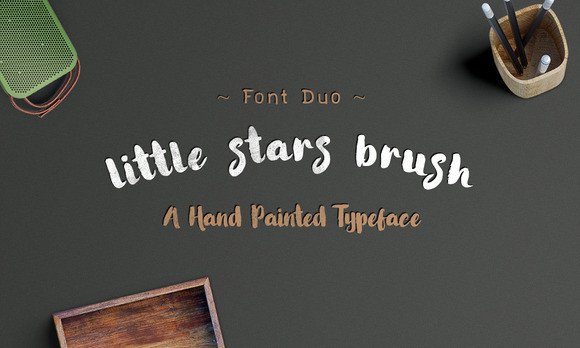
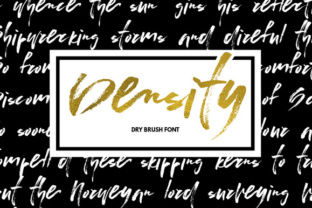
At its core, Density is a dry brush font—a typeface that mimics the marks made by a nearly dry brush dragged across paper. The result is a collection of characters that are intentionally uneven, with varying stroke widths, rough edges, and subtle irregularities. Unlike predictable sans-serif or geometric fonts, Density does not attempt to hide its handmade origins. Each letter bears the evidence of human touch: a slight tremor here, a skipped grain there, an unexpected pause in the flow of ink.
This is not a font that whispers. It declares. It carries the energy of a quick sketch, the urgency of a marker on cardboard, the intimacy of a handwritten note. For professionals and creators who want their work to feel present, tactile, and emotionally immediate, Density offers a visual language that algorithm-perfect typefaces simply cannot replicate.
The name itself—Density—suggests weight, substance, and concentration. It implies that meaning is not spread thin but packed tightly into every stroke. This is a font that asks to be noticed, but it earns attention through texture and authenticity rather than sheer volume.
The Broader Shift: From Polish to Presence
To understand why a font like Density is gaining traction, one must first examine the larger cultural pendulum swing away from hyper-polished aesthetics. For the better part of two decades, digital design celebrated crispness, uniformity, and pixel-perfect alignment. Flat design, minimalism, and sans-serif dominance defined the visual landscape. These choices were rational: they loaded quickly, scaled seamlessly, and communicated clarity.
But something shifted. Consumers, audiences, and clients began to feel that the polish came at the cost of personality. A website that looked like every other website, a logo that could belong to any startup, a social media graphic that felt templated—these were no longer assets but liabilities. The market began rewarding brands that dared to look different, feel raw, and sound human.
This is where Density enters. As a dry brush font, it embodies the authenticity premium—the growing willingness of audiences to favor imperfect but genuine expression over flawless but forgettable design. Whether in product packaging, editorial layouts, video titles, or digital branding, Density signals that a creator has invested not just in aesthetics but in emotional resonance.
Marketers and entrepreneurs are particularly attuned to this shift. They see that generic stock photography and corporate typefaces no longer command attention. Instead, consumers gravitate toward brands that feel like they were made by actual people, for actual people. Density does not pretend to be a machine. It wears its humanness on every edge.
Why People Are Paying Attention to Density
The attention Density is receiving stems from three interrelated forces: the search for differentiation, the rise of tactile nostalgia, and the demand for emotional texture in digital spaces.
Differentiation is the most pragmatic driver. In crowded markets—whether you are a freelancer pitching services, a startup launching a product, or a content creator building a channel—standing out is not optional. A font like Density immediately signals that you are not following the template. It suggests confidence, creativity, and a willingness to break from convention. For professionals who want to communicate that their work is bespoke, Density acts as a visual shorthand.
Tactile nostalgia is another powerful undercurrent. As digital experiences become ever more mediated by screens, people crave reminders of physical reality. Density evokes the sensation of brush on paper, the sound of dry bristles, the smell of ink. It is not merely a visual font; it is a sensory trigger. This matters because memory and emotion are deeply tied to physical experience. A brand that can evoke the feeling of handcrafted work, even in a digital context, creates a stronger bond with its audience.
Emotional texture completes the triad. Density does not just convey information; it conveys mood. An uneven stroke can suggest urgency, spontaneity, or vulnerability. A heavy blot where the brush lingered can imply emphasis or hesitation. These micro-expressions are impossible to program into a uniform typeface. Designers and communicators who understand the power of emotional nuance are increasingly turning to fonts like Density to add layers of meaning that words alone cannot carry.
Changing Needs, Preferences, and Workflows
The relevance of Density also reflects deeper changes in how professionals and creators approach their work. The era of the lone designer working in isolation is giving way to collaborative, iterative, and multi-platform content production. Fonts must be versatile enough to work across formats but distinctive enough to maintain identity. Density meets this challenge by being legible at scale while retaining its hand-drawn character. It works as a headline, a pull quote, a badge, or a hero text. It does not fade into the background.
Furthermore, the tools and platforms available today make it easier than ever to integrate expressive typefaces into workflows. From web fonts to design software to print-on-demand services, the technical barriers have lowered. What was once a specialty choice is now accessible to anyone with a creative vision. Freelancers can use Density to elevate their proposals. Entrepreneurs can use it to differentiate their packaging. Marketers can use it to add punch to campaign visuals.
There is also a growing preference for imperfection as a signal of care. Audiences are sophisticated. They recognize when a design has been mass-produced and when it has been intentionally crafted. Density, with its uneven characters, communicates that someone paid attention. In a world of automated everything, that attention is increasingly rare and increasingly valued.
Practical Examples and Observations
Consider a small-batch food brand launching a new product line. The packaging could use a clean, modern font that says "professional." Or it could use Density on the label, paired with a minimal illustration, to say "handmade, authentic, crafted with care." The latter tells a story before the customer even reads the ingredients. This is not speculative; it is happening across the food, beverage, cosmetic, and apparel sectors.
Or think of a freelance designer pitching a rebranding concept to a local business. Instead of a standard slide deck with Arial or Helvetica, they open with a title slide using Density. The client immediately sees that this designer thinks beyond defaults. The font becomes evidence of the creative value being sold.
In the content creation space, YouTubers and podcasters are using Density for thumbnails, channel art, and merchandise. The rough brush strokes read well at small sizes and convey a sense of raw energy that aligns with authentic, unscripted content. A polished sans-serif might suggest a corporate production; Density suggests a creator who is present and unfiltered.
Even in more traditional contexts, Density finds a role. An architect's presentation on conceptual design, a musician's album artwork, a writer's book cover, a nonprofit's campaign poster—each benefits from the font's ability to communicate human intention. Density does not replace all other typefaces; it enriches the palette available to those who want to communicate with greater depth.
Connecting Density to Larger Developments
The rise of Density is part of a broader movement toward artisanal digital expression. As artificial intelligence generates increasingly seamless text and images, the value of human-made artifacts grows. The imperfections that AI tries to eliminate are precisely the qualities that audiences now seek. Density is a font that cannot be easily replicated by a machine because its character is inherently unpredictable. It is a small but telling example of how human creativity differentiates itself in an algorithm-saturated environment.
This connects to larger conversations about brand humanity. Companies are realizing that trust is built not through flawless advertising but through consistent, transparent, and personable communication. Fonts like Density offer a visual entry point into that trust. They make a brand feel approachable rather than corporate, honest rather than polished, present rather than automated.
There is also a parallel with the slow design movement, which values intentionality, sustainability, and emotional durability over speed and disposability. Density belongs in that ethos. It is not a trend-driven novelty font; it is a tool for creators who want their work to last and to mean something. The uneven strokes are not mistakes; they are records of a process. Using Density is a conscious choice to slow down and let the medium speak.
Practical Guidance for Using Density
Density works best when it is used deliberately. Here are some contextual considerations for professionals and creators:
- Pair it sparingly. Density is a statement font. Use it for headlines, emphasis, or key visual elements. Let simpler typefaces handle body text and supporting information.
- Consider the medium. Density shines in digital formats where texture can be rendered clearly—like high-resolution screens, print, or video. Test it at the sizes and resolutions your audience will see.
- Align with tone. Density communicates energy, authenticity, and craftsmanship. Use it when those qualities match your message. Avoid it in contexts that require strict neutrality or extreme formality.
- Experiment with color and background. Because Density has a dry brush texture, it interacts interestingly with different backgrounds. A slightly off-white, paper-like backdrop can enhance the handmade feel.
- Stay consistent. If Density becomes part of your brand voice, use it consistently across the points where you want to signal human connection. Erratic use can dilute its impact.
Conclusion: Density as a Signal of Intent
Density is more than a font. It is a statement about how we choose to communicate in an age of sameness. For professionals, creators, entrepreneurs, marketers, freelancers, and enthusiasts, adopting Density is not just a design decision—it is a strategic one. It signals that you value authenticity over polish, connection over distance, and craft over convenience.
The uneven characters of Density are not flaws. They are evidence of life. And in a world where so much communication is automated, templated, and optimized into invisibility, a little evidence of life goes a very long way.
Whether you are building a brand from scratch, refreshing an existing identity, or simply looking for a way to make your next project stand out, consider what Density can do. It may look like a brushstroke, but what it really offers is a chance to be seen as someone who cares—about the work, about the audience, and about the message. That kind of density is rare. It is also, increasingly, what the market rewards.