Handbrushed: A Hand-Drawn Font Built for Real Creative Work
There is a quiet satisfaction in seeing brush strokes that look like they were made by a hand, not an algorithm. Handbrushed captures that feeling in a font that is both deliberate and loose, structured and alive. It is not trying to be perfect. It is trying to be useful. And that makes it surprisingly versatile for a wide range of creative projects.
Handbrushed is actually a set of two font files: Handbrushed Regular and Handbrushed Swashes Regular. The regular version handles the core letterforms, while the swashes file gives you decorative flourishes, tails, and embellishments. Because the swashes are kept separate, you can mix and match freely without needing extra software or complex workarounds. This small design decision makes a big difference when you are trying to keep a project feeling cohesive without spending hours on adjustments.
What Makes Handbrushed Different
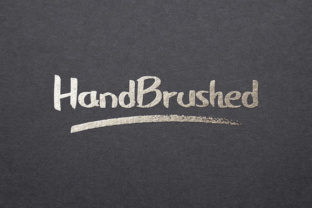
Many brush fonts try to simulate hand-lettering with digital precision. Handbrushed takes the opposite approach. It was drawn entirely by hand using a thick brush on paper, and the digital version preserves the natural weight variation, slight wobble, and uneven edges that come from real brushwork. The result is a sans-serif style font that feels human without being sloppy.
The font includes uppercase and lowercase characters, numbers, and a full set of glyphs. The letterforms are bold enough to hold their own at display sizes but remain readable at smaller scales. This makes Handbrushed useful for both headlines and short body text, especially when you want to avoid the coldness of a strict geometric sans-serif.
The Process Behind the Typeface
The designer spent about sixty to seventy A4 sheets of paper working through the letterforms. Each stroke was made with a black thick brush, and the process involved the kind of repetition that refines a shape without stripping away its character. Coffee, as the designer puts it, was essential. Loads of it. That kind of analog process shows up in the final font in ways that are hard to fake digitally. There is a rhythm to the letters that comes from someone drawing them by hand, making decisions in real time, and letting the medium influence the outcome.
This backstory matters because it affects how the font behaves in real projects. When you use Handbrushed, you are not just selecting a typeface. You are choosing a texture, a pace, and a tone that carries a sense of process into your work.
Creative Possibilities Across Projects
Handbrushed works well in contexts where you want to communicate energy, authenticity, or a handmade quality. It is not a formal font. It is not corporate in the traditional sense. But it can be used in professional settings where the goal is to feel approachable and direct.
Branding and Identity
For small businesses, freelancers, or startups, Handbrushed can serve as a primary brand font when the identity needs to feel personal. A coffee shop, a ceramics studio, a letterpress printer, or a creative consultancy might use it for logos, signage, or packaging. The swashes file adds decorative options for taglines, initials, or accent text. Because the swashes are separate, you can apply them only where they add value, keeping the overall look uncluttered.
Social Media and Digital Content
Social media feeds that rely on text overlays benefit from fonts that carry visual weight without needing elaborate backgrounds. Handbrushed works well on Instagram stories, YouTube thumbnails, and Pinterest pins. The brush texture holds up on screens of all sizes, and the irregular edges prevent the text from looking too sterile. Marketers and content creators who want to stand out from the crowd of clean sans-serif and script fonts will find Handbrushed gives them a distinct voice without screaming for attention.
Print Projects and Small Publications
Posters, flyers, zines, and small-run publications are natural homes for Handbrushed. The font reads well at medium to large sizes, and the hand-drawn quality complements analog printing methods like risograph or letterpress. Even in digital print, the brush texture adds warmth. Educators, publishers, and hobbyists working on newsletters, workshop materials, or event promotions can use Handbrushed to signal that the content is made with care, not mass-produced.
Practical Guidance for Using Handbrushed
Getting the most out of Handbrushed involves a few straightforward decisions about spacing, pairing, and context. The font has a strong personality, so it works best when you give it room to breathe.
Pairing with Other Typefaces
Handbrushed pairs well with simple, neutral fonts. A clean serif like a classic book face or a straightforward geometric sans-serif can support the brush texture without competing with it. Use Handbrushed for headings and the supporting font for body text. This creates a clear hierarchy that feels intentional rather than chaotic. For digital projects, consider pairing Handbrushed with a system font like Inter or Roboto to keep load times low while maintaining visual contrast.
Using Swashes with Intention
The separate swashes file is an advantage, but it is also easy to overuse. Apply swashes to initial letters, the end of a line, or as an accent on a key word. When every letter gets a flourish, the effect loses its impact. A single well-placed swash can draw the eye exactly where you want it. A page full of swashes becomes noise. Treat the swashes like punctuation, not decoration.
Maintaining Readability
Because Handbrushed has a bold brush texture, it works best at sizes above 24 points for headings. At smaller sizes, the texture can overwhelm the letter shapes. If you need to use it for short body text, keep the line length short and the leading generous. This gives the letters room to be read without feeling cramped. For longer passages, use a simpler supporting font and reserve Handbrushed for emphasis.
How Different Creators Can Adapt Handbrushed
The same font can serve very different purposes depending on who is using it and what they are trying to communicate.
Designers and Creative Professionals
For designers, Handbrushed offers a way to inject handmade texture into digital work without scanning physical lettering. It saves time while still delivering an organic look. Use it in branding mockups, packaging concepts, or editorial layouts where you want to test a hand-drawn direction quickly. Because the font is consistent across all characters, you can rely on it for client presentations without worrying about missing letters or uneven spacing.
Marketers and Small Business Owners
Marketers who manage multiple channels will appreciate that Handbrushed works across print, web, and social media with minimal adjustments. A small business owner can use it on a website hero section, a Facebook ad, and a product tag without the font feeling out of place in any medium. This consistency builds recognition. For entrepreneurs who do not have a dedicated design team, a font that handles well in different contexts reduces the number of decisions needed to keep the brand looking cohesive.
Educators and Hobbyists
Teachers, workshop leaders, and hobbyists creating their own materials can use Handbrushed to give worksheets, guides, and handouts a friendly, approachable tone. It works especially well for titles, section headers, and callout boxes. The hand-drawn quality suggests that the material was prepared with care, which can increase engagement from students or participants. For personal projects like scrapbooks, journals, or gift tags, Handbrushed adds the look of custom lettering without requiring any drawing skill.
Keeping Results Clear and Audience-Friendly
No matter how good a font looks, clarity comes first. Handbrushed has strong visual character, but that character should support your message, not obscure it. When you use the font, check that your audience can read it quickly. If you are designing for an older audience or a context where text needs to be processed fast, increase the size and spacing slightly. The extra room makes the brush strokes easier to parse.
Consistency also matters. If you use Handbrushed for headings, use it for all headings in a project. If you use it only for accent words, stick to that pattern. Inconsistent application of a distinctive font can make a layout feel disjointed. Decide on the role Handbrushed will play in your project and commit to it.
Originality comes naturally when you use a hand-drawn font because each letter carries the imperfections of the human hand. But originality does not mean chaos. The best results come when you combine Handbrushed with solid layout principles: clear hierarchy, generous whitespace, and a limited color palette. Let the font do the expressive work, and let everything else stay restrained.
Why Handbrushed Deserves a Place in Your Toolkit
Handbrushed is not trying to be every font at once. It is a specific tool for a specific kind of communication. It says that someone made this. It says that the message has texture. It says that the person behind the project cared enough to choose something that feels real.
For creators who work across different formats and audiences, having a font like Handbrushed in the rotation gives you an option that is neither sterile nor frivolous. It sits in a useful middle ground where personality and practicality meet. Whether you are designing a logo, building a social media campaign, printing a poster, or putting together a workshop packet, Handbrushed gives you a hand-drawn voice that is ready to work from the first character to the last swash.
And because the regular and swashes files are separate, you get to decide exactly how much of that voice you want to use. That control, combined with the craft behind each letterform, makes Handbrushed a font worth returning to for projects that need a human touch without losing professional clarity.