Delightful: A Stunning Handwritten Font for Modern Creatives
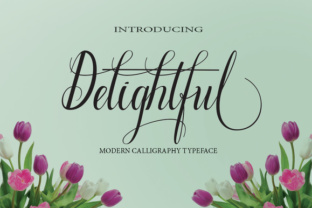
There is a quiet revolution happening in digital design. For years, clean sans‑serifs and rigid geometric typefaces dominated screens—safe, efficient, and undeniably corporate. But today, something warmer is taking hold. Creatives, entrepreneurs, and even casual hobbyists are reaching for fonts that look less like machine output and more like human expression. Among the rising stars in this movement is Delightful, a stunning handwritten font that draws inspiration from modern calligraphy fonts. Created by hand and carrying a natural, easy‑going style, Delightful is proving that personal, imperfect beauty has a powerful place in our digital world.
This shift isn't arbitrary. As audiences become more discerning and brands chase authenticity, the visual language we use must evolve. A font like Delightful doesn't just sit on a page—it communicates personality, intention, and a break from the formulaic. Whether you are a freelance designer crafting a logo, a blogger building a cohesive visual identity, or a small business owner trying to stand out on social media, understanding why a handcrafted typeface matters can transform how you connect with your audience. This article explores what makes Delightful relevant right now, how it fits into broader trends in typography and design, and how you can use it effectively in your own work.
The Evolution of Typography in the Digital Age
Typography has always mirrored the tools and tastes of its time. The invention of movable type gave us standardized letterforms better suited to mass production. The industrial revolution brought slab serifs and bold display faces that shouted from posters. Then came the digital era, where clean, uniform fonts became the default because early screens could barely render anything more complex. For decades, designers worked within severe technical constraints. But that period is ending.
Modern devices render detail beautifully, and more importantly, the people using them have grown tired of cookie‑cutter aesthetics. The most effective designs today feel personal, even when they are created at scale. This is where Delightful enters the picture. As a font created by hand, it carries the subtle irregularities—the occasional uneven stroke, the natural slant, the trusting‑arm gesture—that make text feel less like code and more like a note from a friend. This evolution from “legible at any cost” to “expressive and human” is not a passing fad; it reflects a deeper craving for connection in an increasingly digital and automated world.
Part of this trend is the resurgence of modern calligraphy. What once lived on wedding invitations and art prints has migrated into logos, website headers, and marketing materials. The appeal is obvious: calligraphy suggests care, artistry, and a human touch. Delightful channels that spirit without being overly ornate or difficult to read. It captures the essence of a hand‑lettered style in a format that works across both print and screen. For anyone who wants their content to feel approachable and crafted, this typeface offers a bridge between the heritage of pen‑and‑ink and the demands of contemporary digital workflows.
Why Handcrafted Fonts Resonate Today
To understand why fonts like Delightful are gaining traction, we have to look at what audiences now value. Trust has become a scarce commodity in marketing. People are bombarded with slick, templated content that feels mass‑produced. In response, both consumers and creators are prioritizing authenticity over polish. A handwritten font signals that a real person was behind the message. It implies effort, creativity, and a departure from the corporate script.
Consider the rise of personal branding. Freelancers, coaches, and small business owners need to differentiate themselves in crowded niches. A unique visual identity often starts with typography, and Delightful provides an instant personality boost. Its natural, easy‑going style works particularly well for industries that rely on emotional connection: wedding stationery, lifestyle blogs, children’s products, handmade goods, wellness brands, and creative agencies. Even in more traditional fields, using a handwritten font on a thank‑you note or an email signature can humanize the communication.
Moreover, the font’s hand‑drawn origin adds a layer of authenticity that consumers can feel—even if they can’t articulate it. When someone sees text rendered in Delightful, they aren’t just reading words; they are sensing the gesture behind them. This aligns perfectly with the trend toward “slow design” and mindfulness, where people appreciate the story behind an object. A font that was literally created by hand carries a narrative that a standard typeface cannot.
Practical Applications for Designers, Entrepreneurs, and Content Creators
The versatility of Delightful makes it a valuable addition to any creative toolkit. Here are realistic ways professionals and hobbyists are using it to elevate their work.
Branding and Logos
For startups and small businesses, a logo is often the first impression. Using Delightful as the primary wordmark instantly signals approachability and craftsmanship. Pair it with a clean sans‑serif for supporting text—body copy on a website, for instance—and you have a balanced system that feels both friendly and reliable. The font’s natural flow works beautifully in both short taglines and longer business names, provided the name isn’t excessively long. Keep in mind that handwritten fonts shine when used sparingly; a logo or a key header is enough to set the tone.
Social Media Graphics
On platforms like Instagram, Pinterest, and LinkedIn, visual consistency matters. Delightful can appear in quote cards, product announcements, and branded story templates. Because the font feels personal, it pairs well with raw, behind‑the‑scenes content. For example, a florist might use Delightful to overlay the name of a new arrangement on a photo of the bouquet, or a life coach might use it for motivational posts. The key is to use it where you want the viewer to feel an emotional hook—not in dense blocks of text.
Invitations, Stationery, and Personal Projects
Delightful is especially suited for printed materials that celebrate life events. Wedding invitations, save‑the‑dates, birthday party announcements, and holiday cards all benefit from the warmth of hand‑lettering. Because the font was designed by hand, it captures the nuance of real calligraphy without requiring you to write every letter yourself. You can combine it with subtle watercolor elements or simple icons to create a cohesive suite. For entrepreneurs selling such designs, using Delightful can become a trademark look that customers recognize.
Blog Headers and Digital Products
Bloggers and educators often need to make their content stand out in a sea of information. A blog title set in Delightful immediately draws the eye and conveys that the content is personal and thought‑through. If you create digital planners, worksheets, or e‑books, consider using the font for section headings or call‑out quotes. The natural, easy‑going style reduces the clinical feel of many document‑oriented designs, making the user experience more pleasant.
How to Use Delightful Effectively: Practical Recommendations
While Delightful is beautiful, like any tool it demands thoughtful application. Here are grounded tips to get the most out of it without falling into common traps.
- Respect readability. Handwritten fonts are best for short to medium lengths—headlines, captions, emphasis. Avoid setting long paragraphs in them. Screen fatigue is real; if you force readers to decipher lengthy passages in a script style, you will lose them. Use Delightful for the emotional accents, not the full body.
- Pair with a neutral partner. The most successful designs use contrast. Combine Delightful with a clean, legible font for body text—think a geometric sans‑serif or a classic serif. This creates a hierarchy that guides the reader while allowing the handwritten style to pop.
- Consider the medium. On high‑resolution screens, Delightful will capture its hand‑drawn nuances. On older or lower‑resolution displays, test it at various sizes to ensure the details don’t blur. For print, check the font’s weight—it works beautifully on coated paper for invites, but try a slightly bolder variant if printing on textured, absorbent paper.
- Don’t over‑use it across a design system. A single visual element—say, one logo or one set of headings—can carry the handwritten personality. If you start applying Delightful to every subheading, caption, and button, the effect dilutes and can even feel chaotic. Use it where you want the audience to pause and feel.
- Test with your audience. If you are using Delightful in a brand identity for a client or for your own business, run a quick A/B test. Show a version with the handwritten font against a more standard option. Track engagement metrics, or simply ask a few customers which feels more trustworthy. Often, the handwritten version will win on emotional appeal without sacrificing clarity.
The Changing Landscape of Design and User Expectations
The growing preference for handcrafted fonts like Delightful is not happening in a vacuum. Several broader shifts make this typeface particularly relevant right now.
First, remote work and digital communication have blurred the line between professional and personal. A brand that uses a warm, handwritten font in its email newsletters or social media posts signals that behind the business is a real human being. This authenticity is increasingly valued by younger demographics—millennials and Gen Z—but it also resonates with older audiences who appreciate craftsmanship. It is not about being trendy but about being relatable.
Second, the rise of “design thinking” and user‑centered approaches means that aesthetics are now evaluated for their emotional impact. Typography is no longer just about delivering information; it is about creating an atmosphere. Delightful evokes a sense of ease, creativity, and personal attention. When a brand or individual chooses this font, they are saying: “We care about how you feel when you encounter our work.”
Third, the barrier to entry for quality design has lowered. Platforms like Canva, Adobe Express, and even advanced tools like Figma and Affinity make it easy to experiment with premium fonts. Consumers have become more visually literate. They can distinguish between a generic script and a carefully crafted handwritten font. Delightful qualifies as the latter because of its hand‑made origin, which gives it a level of detail that automatic “script” generators cannot replicate. This aligns with the market’s demand for unique, premium assets—even from small creators.
Looking Ahead: The Staying Power of Handwritten Typography
Will handwritten fonts always be popular? Trends change, but the human need for connection does not. What Delightful offers—a direct, human gesture translated into digital form—is likely to remain valuable as long as people communicate through screens. In fact, the more automated our tools become, the more we may crave the visible signs of human hands. Already, we see brands using hand‑drawn illustrations and custom lettering to differentiate themselves. Delightful fits into this enduring mindset: it provides a professional, accessible way to add that human touch without needing to hire a calligrapher every time.
For designers and business owners, the practical takeaway is to keep an eye on authenticity as a design principle. Whether you are building a website, creating a presentation, or designing a product label, ask yourself: “Does this look like a template, or does it feel like it came from a real person?” If the answer is too far toward the template side, a font like Delightful can nudge the balance back.
This does not mean every project should use handwritten fonts. There are contexts where strict legibility and neutrality are paramount—legal documents, scientific reports, user interfaces that require scanning speed. But for the many moments between, where you want to invite, inspire, or connect, a carefully chosen handwritten typeface can make all the difference.
Conclusion: Make Your Message Feel Human
Delightful is more than a beautiful script. It is a response to a cultural moment where people value realness over perfection. Its hand‑crafted origin, modern calligraphy inspiration, and natural, easy‑going style make it a versatile asset for anyone who wants their content to feel personal. Whether you are a professional designer or a small business owner handling your own branding, this font offers a simple way to convey warmth and care.
In a world of automated replies, templated designs, and generic visuals, the most powerful thing you can do is show that a human was behind the work. Delightful helps you do that—one character at a time. Try it in your next project, and notice how the response changes. Sometimes, all it takes is the right letter to turn a message into a meaningful conversation.