Candyland: A Playful and Elegant Font for Personalized Design Projects
Typography has a remarkable ability to set the tone for any visual project. A single typeface can evoke feelings of nostalgia, luxury, whimsy, or sophistication. In recent years, the demand for fonts that balance playfulness with elegance has grown significantly, especially among creators who want their work to feel both approachable and refined. Candyland has emerged as a popular choice in this niche, offering a distinctive combination of curving letterforms and a light, airy aesthetic. This article explores the practical applications, design characteristics, and considerations for using Candyland effectively, whether you are a professional designer, a business owner, or a hobbyist working on a personal project.
Where Candyland Shines: Key Applications
One of the most compelling aspects of the Candyland font is its versatility across different types of printed and digital materials. While many fonts are confined to a single use case, Candyland adapts well to contexts that require both a personal touch and a polished appearance.
Wedding and Event Invitations
Wedding invitations demand a typeface that communicates warmth, celebration, and elegance without being overly formal. Candyland meets this need beautifully. Its fluid strokes and gentle curves lend themselves to invitation wording for bridal showers, wedding ceremonies, and receptions. The font reads as intimate and handcrafted, making it an excellent choice for couples who want their stationery to reflect a personal story. For example, using Candyland for the names of the bride and groom on the invitation cover, while pairing it with a clean serif font for body text, creates a balanced hierarchy that feels both customized and readable.
Similarly, birthday invitations benefit from the font's playful undertones. For children’s parties, Candyland adds a layer of whimsy without resorting to cartoonish lettering. For milestone birthdays like a 21st or 50th, the elegant side of the font helps the invitation feel celebratory yet sophisticated. Event planners often rely on Candyland to unify themed decor with printed materials, ensuring that signage, place cards, and programs all share a cohesive visual language.
Quotes, Wall Art, and Personalized Gifts
The rise of home decor and gift personalization has created a strong market for fonts that look both artistic and legible. Candyland is frequently chosen for quote prints, wall art, and custom gifts because its lettering carries an inherent emotional resonance. A motivational quote rendered in Candyland feels more heartfelt than one set in a standard script font. The slight irregularities in the letterforms mimic hand-lettering, giving the finished product a unique, human quality.
For personalized gifts such as mugs, pillows, or tote bags, Candyland allows the recipient's name or a short message to become the focal point of the design. Small businesses that specialize in custom merchandise often include Candyland in their font library because it photographs well and remains legible even in small sizes. When applied to wooden signs or acrylic prints, the font’s spacing and weight distribution ensure that each word stands out clearly.
Branding for Lifestyle and Wedding Businesses
Entrepreneurs in the wedding and lifestyle industries have adopted Candyland as part of their visual identity. Wedding planners, florists, and calligraphers use the font in their logos, business cards, and social media graphics. The feminine elegance of Candyland communicates a focus on detail and a love for beauty, which aligns well with the values of these businesses. Even when used sparingly—such as in a logo mark or a tagline—the font adds a layer of personality that distinguishes a brand from competitors using more generic typefaces.
Understanding the Characteristics of Candyland
To use Candyland effectively, it helps to understand the specific design traits that define this typeface. These characteristics influence where the font performs best and how it interacts with other elements in a layout.
Elegant Curves and a Feminine Touch
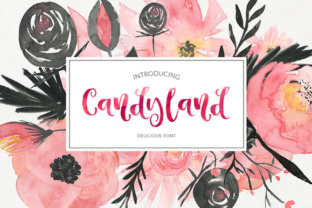
Candyland is characterized by its smooth, sweeping curves and a distinct softness in its terminals. The lowercase letters often feature loops and swashes that extend gracefully, creating a rhythmic flow across the page. This elegance is balanced by a playful irregularity in letter width—some characters are narrower, others wider—which prevents the text from feeling mechanical. The font’s feminine quality does not limit its use to exclusively female audiences; rather, it makes the typeface suitable for projects that require a gentle, welcoming aesthetic.
The contrast between thick and thin strokes is moderate, which helps Candyland avoid the fragility of some delicate script fonts. This gives designers confidence when scaling the font for different print sizes, from small address labels to larger poster titles.
Readability and Versatility
Despite its ornamental appearance, Candyland maintains a surprising level of readability. The open counters and generous spacing between letters prevent the text from becoming cramped, which is a common problem with many script fonts. This readability makes Candyland viable for short paragraphs or captions, not just headlines. In practice, this means the font can be used for a product description on a greeting card or a brief welcome message on a website banner without sacrificing legibility.
Versatility extends to color applications as well. Candyland works nicely in both light and dark backgrounds, though it tends to shine when used with soft pastels or white space. The font also responds well to metallic finishes, such as gold or rose gold foil stamping, which is a popular choice for premium invitations. Designers who experiment with letterpress or embossing often find that Candyland’s curves catch light attractively, adding depth to the final print piece.
Practical Advantages for Creators and Businesses
Choosing Candyland is not merely an aesthetic decision; it offers tangible benefits for people who produce design work regularly.
Customization and Branding Potential
One of the most valuable aspects of Candyland is its ability to be customized further. Because the font has a handcrafted feel, designers can adjust the tracking or add subtle swashes to create a version that feels entirely unique. For a brand that wants to stand out, small modifications to a font like Candyland can become a signature element. For example, a wedding planner might consistently use a slightly stretched version of the font for all client communications, building brand recognition over time.
For businesses, using Candyland in marketing collateral—such as email headers, promotional postcards, or packaging inserts—helps create a consistent visual identity that aligns with a warm, personal brand voice. The font encourages a connection with the audience that more sterile typefaces cannot achieve.
Ease of Use for DIY Projects
Not everyone who designs with Candyland is a professional typographer. Hobbyists and DIY enthusiasts appreciate the font because it is straightforward to implement. It comes in standard file formats like OTF and TTF, and it works across major design software such as Canva, Adobe Illustrator, and Cricut Design Space. The learning curve is minimal: users can apply Candyland to a project and immediately achieve a look that feels curated and professional. This accessibility expands the circle of people who can produce high-quality personalized items, from homemade birthday banners to custom gift tags.
Considerations When Using Candyland
Like any typeface, Candyland has specific considerations that affect its performance in different contexts. Being aware of these factors helps avoid common pitfalls.
Pairing with Other Fonts
Candyland pairs best with fonts that contrast its organic curves. Sans-serif fonts with clean, geometric lines—such as Montserrat or Raleway—provide excellent balance. The contrast between a rigid sans-serif body text and Candyland’s fluid display text creates visual interest without competition. Serif fonts can also work, but designers should choose those with moderate stroke contrast to avoid a cluttered appearance. When pairing, it is wise to limit the number of fonts to two or three to maintain clarity.
Sizing and Spacing for Different Mediums
Because Candyland has decorative elements, it performs best at medium to large sizes. At very small point sizes (below 12pt), the finer strokes and swashes may become indistinct, especially in digital formats or low-resolution printing. For signage or large prints, the font maintains its integrity and becomes more dramatic. When using Candyland for body text, increasing the line height can improve readability. In web design, ensuring that the font is served as a web font with proper hints will preserve its character across browsers.
Additionally, users should consider the medium’s texture. On uncoated paper or rough substrates, the font’s thin strokes might bleed or fill in. Testing a sample print before final production is always a good practice, particularly for small items like favor tags or stickers.
Bringing Designs to Life with Candyland
The real power of Candyland emerges when designers integrate it into a full project workflow. Starting with a clear hierarchy—where the font is used for headers and key names while a complementary typeface handles secondary information—creates a cohesive result. Color choices also matter. Soft blush tones, lavender, mint, and warm neutrals enhance Candyland’s elegance, while bolder colors like navy or deep burgundy can make the font pop for more dramatic designs.
For digital projects, such as Pinterest graphics or Instagram posts, Candyland works effectively when layered over a subtle texture or a photographic background with plenty of negative space. The font’s personality shines when it is not competing with busy visuals. Video titles and lower thirds can also benefit from Candyland’s readability, though animators should watch for thin stroke visibility on moving screens.
Educators and workshop leaders who teach design or calligraphy have found Candyland useful as a reference point for discussing modern script aesthetics. By analyzing the font’s letter construction, students learn about balance, rhythm, and the emotional impact of typography. This educational angle adds another layer of value to the font beyond its direct application.
Ultimately, Candyland occupies a unique space in the vast landscape of typefaces. It succeeds at being both playful and refined, making it a reliable tool for anyone who wants to communicate warmth and elegance through text. Whether you are planning a wedding, launching a lifestyle brand, or creating a heartfelt gift, the thoughtful use of this font can elevate your project from ordinary to memorable. By considering the applications, characteristics, advantages, and practical considerations outlined here, you can make informed choices that honor the design potential of Candyland while meeting the specific needs of your audience. The key is to let the font complement your content, not overwhelm it, and to trust that a well-chosen typeface speaks volumes before a single word is read.