Poetry Fiction: A Font Duo for Writers, Designers, and Storytellers Who Live Between the Lines
For anyone who builds worlds with words, the tools of the trade matter more than most people realize. A font is not just a decorative choice. It is a vehicle for tone, mood, and clarity. When you spend hours refining a poem, drafting a novel, or designing a book cover, the typeface you choose shapes how your work is received. That is why a font family like Poetry Fiction deserves a closer look. It is not a single font. It is a carefully paired duo: a script font and a sans serif font, each designed with a distinct creative purpose. Whether you are publishing a collection of short stories, building a brand around literary aesthetics, or simply trying to bring more intention to your personal projects, this typeface system offers practical value at every stage of the process.
What Poetry Fiction Actually Is
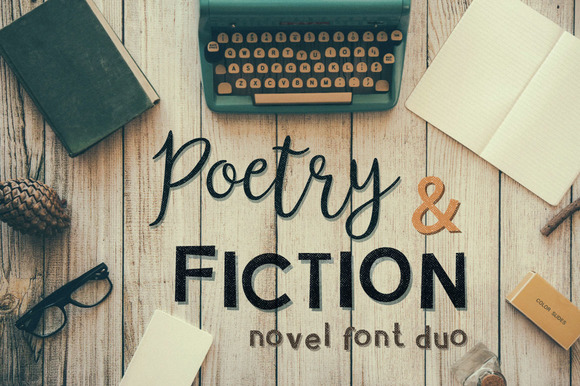
At its core, Poetry Fiction is a two-font system built for people who cannot imagine a life without fiction. The script font draws inspiration from the novels and poetry of the nineteenth century. It carries an emotive, handwritten quality that feels both personal and refined. This is not a casual handwriting font. It has structure, elegance, and a deliberate sense of history. The sans serif, by contrast, was created through a more experimental method. It was cut out from newspaper letterforms and stylized to produce an effect of mystery and secrecy. The result is a typeface that feels layered, as though each letter carries a backstory. Together, these two fonts form a practical toolkit for anyone who works with narrative, whether in print, on screen, or in physical products.
Both fonts include multilingual support, which removes a common barrier for international projects. If you are designing for a global audience, or if your own work incorporates multiple languages, this is a practical advantage. You do not need to switch typefaces mid-project. The same aesthetic consistency applies across languages.
Where Poetry Fiction Fits in a Real Workflow
Creative workflows rarely follow a straight line. But most projects, whether you are writing a book, designing a marketing campaign, or building a brand identity, pass through several recognizable phases: planning, creation, revision, and delivery. Poetry Fiction can be useful in each of these phases, but the way you use it depends on your role and your goals.
Before the Project: Setting the Mood and Direction
In the early stages of a project, you are often searching for a visual or emotional anchor. If you are a writer, you might be trying to find the right voice for a character or the right atmosphere for a scene. If you are a designer, you might be gathering references and testing visual directions. This is where Poetry Fiction Script can serve as an inspiration tool. Its 19th-century literary feel can help you imagine the tone of a project before you commit to specific layouts or typography. Try using it in mood boards, concept sketches, or even in a simple document where you free-write ideas. The font itself can pull you toward a more lyrical, reflective style of thinking.
For entrepreneurs and small business owners, this phase might involve defining a brand voice. If your business revolves around storytelling, publishing, or creative services, seeing your brand name in a font like Poetry Fiction can clarify whether the direction feels authentic. It is a low-stakes test that saves time later.
During the Project: Hands-On Implementation
When the project moves into active creation, the two fonts begin to serve distinct practical functions. The script font works well for headlines, chapter titles, pull quotes, and any place where you want emotional resonance to lead. Because it is emotive and handwritten, it draws the eye and signals a shift in tone. Use it sparingly. Overusing a script font, especially one with as much character as Poetry Fiction Script, can fatigue the reader. Reserve it for moments that deserve emphasis.
The sans serif, with its cut-out newspaper aesthetic, is more versatile for body text, captions, subheadings, or supplementary content. Its mysterious, slightly gritty feel works well in contexts where you want to suggest depth, secrecy, or layered meaning. If you are designing a book cover for a psychological thriller, for example, the sans serif can carry the title in a way that feels intentionally unsettling. For a poetry collection, the sans serif can ground the more emotional script with a steady, readable counterpoint.
One practical workflow tip: set up your document or design file with both fonts loaded and assigned to specific styles before you begin writing or laying out pages. This prevents you from having to make formatting decisions under time pressure later. Most design software, including Adobe InDesign, Canva, and Affinity Publisher, supports this approach. For writers using Word or Google Docs, you can still toggle between the two fonts as you draft, though the visual impact is strongest when you control spacing, sizing, and color.
After the Project: Quality Control and Polish
In the revision and delivery phase, Poetry Fiction can help you refine the overall consistency of your work. Go through your document or design and check that the font usage aligns with the emotional arc of the content. Does the script appear in places that truly benefit from its warmth? Is the sans serif used for sections that need neutrality or mystery? This is also the time to verify that the multilingual support works correctly if you have used accents or non-Latin characters. Test the fonts at different sizes and on different devices if you are publishing digitally. The script font, like many handwritten typefaces, can become harder to read at very small sizes, so adjust your layout accordingly.
How Poetry Fiction Interacts with Other Tools and Assets
A font does not work in isolation. It lives alongside images, colors, layouts, and other typography. Poetry Fiction pairs well with classic serif fonts for contrast, or with clean geometric sans serifs if you want a more modern counterpart. Because the script has a vintage literary feel, it also complements paper textures, muted color palettes, and hand-drawn illustrations. If you are working on a book interior, consider using Poetry Fiction Script for the title page and chapter openers, and a neutral text font the body. The sans serif can handle the copyright page, table of contents, and other front matter where clarity matters more than personality.
For digital products, such as social media graphics, email newsletters, or web copy, the sans serif is generally more legible on screens. Use the script sparingly in digital contexts, and always test readability on mobile devices. The cut-out newspaper effect of the sans serif can add texture to digital designs that might otherwise feel flat. Pair it with a subtle shadow or a slightly off-white background to emphasize its tactile quality.
Practical Implementation Tips for Long-Term Use
If you are considering adding Poetry Fiction to your permanent toolkit, think about how it fits into your broader system of fonts and assets. Consistency matters. If you use this font duo across multiple projects, your audience may begin to associate it with a certain tone or quality. That can be a strength if you are building a brand. But if you use it for everything, it loses its impact. Treat it as a specialty tool rather than a workhorse.
For publishers and educators, the font can be a useful asset for classroom materials, literary magazines, or small press publications. The multilingual support makes it practical for language learning contexts or multicultural content. For freelancers and content creators, it can differentiate your work in a crowded market. A well-chosen typeface signals professionalism and care.
Storage and organization also matter. Keep the font files in a dedicated folder, and install them properly on your system. If you work across multiple devices, use a cloud-based font management tool or sync the files through a service like Adobe Fonts or Google Fonts if compatible. This ensures you always have access when a deadline is tight.
Quality Control and Consistency Over Time
As you use Poetry Fiction across different projects, pay attention to how it performs under different conditions. Note any issues with kerning at specific sizes, readability in long paragraphs, or rendering on different screens. Create a simple style guide for yourself or your team that specifies when to use each font, what sizes work best, and which color combinations complement the aesthetic. This saves time on future projects and helps maintain a consistent output quality.
If you collaborate with other designers, writers, or publishers, share this style guide along with the font files. Clear communication about typography prevents mismatched designs and reduces revision cycles. It also helps everyone involved understand why a particular font was chosen, which builds trust in the creative process.
Final Observations on the Practical Value of Poetry Fiction
Poetry Fiction is not a font family you use every day for every task. It is a specialized tool for projects that benefit from narrative depth, vintage atmosphere, or a sense of emotional intimacy. The combination of a literary script and a newspaper-inspired sans serif gives you a flexible system that can handle both decorative and functional roles. Whether you are publishing a novel, designing a brand identity for a bookstore, creating content for a literary blog, or producing educational materials with a touch of elegance, this font duo offers a practical path from concept to completion.
The best tools in any creative workflow are the ones that feel invisible when they work well and essential when they are missing. Poetry Fiction has the potential to become that kind of tool. It respects the craft of writing and the craft of design equally. And for anyone who cannot imagine a life without fiction, that alignment is worth the investment.