Liniga Serif
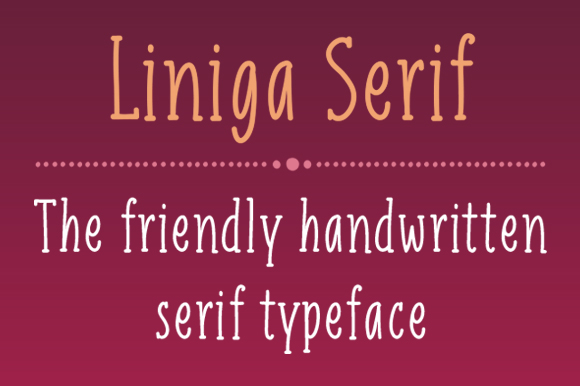
Liniga Serif is a display typeface that combines the warmth of handwriting with the structure of a serif. It is the serif version of the original Liniga font, sharing its tall x-height, low contrast, and intentionally simple letterforms. The result is a character set that feels both friendly and deliberate—approachable without sacrificing readability. For anyone evaluating typefaces for branding, headlines, or editorial design, understanding what Liniga Serif offers and where its limitations lie can help determine whether it aligns with a project’s tone and practical needs.
What Sets Liniga Serif Apart
At its core, Liniga Serif preserves the hand-drawn quality of its sans-serif counterpart while adding subtle serifs that give each letter a more grounded appearance. The low contrast between thick and thin strokes reduces visual noise, and the simple structure means glyphs remain legible even at larger sizes. The typeface’s tall proportions contribute to a sense of openness, which can make short blocks of text feel less dense. This combination of traits is relatively uncommon: most handwritten fonts tend to be either very casual and inconsistent or more rigid and geometric. Liniga Serif strikes a middle ground, offering a controlled yet organic look.
Why Designers Consider Liniga Serif
People researching Liniga Serif are often drawn to its personality. The typeface conveys warmth and a human touch without appearing overly decorative or childish. This makes it a candidate for projects that need to feel personal but still professional. For instance, it can work well in branding for cafes, boutiques, or creative agencies where a friendly voice is part of the identity. Its tall lowercase letters also improve readability in headings and short passages, especially when set at larger point sizes.
Another reason for interest is the simplicity of the design. Because strokes are relatively uniform and serifs are not exaggerated, the typeface does not demand a lot of attention to the details of each glyph. This can be an advantage when the message itself should take center stage. It also reduces the risk of clashing with other visual elements on the page.
Benefits of Using Liniga Serif
- Readability at display sizes – The open shapes and tall x-height help letters remain distinct even when scaled up for posters or headings.
- Friendly but structured appearance – Suitable for contexts where you want a handcrafted feel without sacrificing order. The serifs add a subtle anchor that can make the typeface feel more settled than a purely sans-serif handwritten font.
- Low visual contrast – Reduces eye strain in short passages and maintains consistency across different letters. This is particularly helpful when the typeface is used on screens with varying resolutions.
- Versatility within its niche – While it is not a general-purpose text font, it can be used across a range of print and digital applications where a handwritten serif style is appropriate, such as social media graphics, product labels, or blog post headers.
Tradeoffs and Limitations
No typeface works in every situation, and Liniga Serif is no exception. Its handwritten origin means it lacks the mechanical consistency of most classical serif fonts. For long body text, especially at smaller sizes, the irregular spacing and slight variations in stroke width can become distracting. Readers accustomed to more uniform book faces may find it tiring over several paragraphs.
Another tradeoff is character set coverage. As a specialty typeface, Liniga Serif may not include extended Latin characters, small caps, or multiple weights. If a project requires heavy text styling—such as bold, italic, and small caps in the same paragraph—the options may be limited. Similarly, the typeface’s personality, while appealing in many informal contexts, can feel out of place in formal documents, legal materials, or corporate annual reports.
Pairing Liniga Serif with other typefaces also requires care. Its handwritten serif structure does not blend seamlessly with every style. Sans-serif fonts with a modern or geometric character can create a complementary contrast, while more ornate serifs may compete for attention. Designers often need to test several combinations before finding a good match.
Scenarios Where Liniga Serif Shines
Liniga Serif is strongest in display roles where its personality can contribute to the overall tone. Examples include:
- Brand identity materials – Logos, taglines, and business names that benefit from a human, approachable touch.
- Children’s book covers – The friendly letterforms align well with playful or educational themes.
- Invitations and gift tags – Short, decorative text where handcrafted appeal adds value.
- Social media graphics – Headlines and short quotes that need to stand out in a feed without appearing too formal.
- Product packaging – Labels for artisans, natural products, or small businesses that emphasize authenticity.
In all these cases, the typeface’s tall, open design and low contrast help it remain legible even when overlaid on images or applied to textured surfaces.
When Alternatives May Be Worth Considering
There are situations where another typeface might serve better. If the project involves large amounts of body copy (over 200 words per page), a standard book serif or a carefully designed slab serif with higher readability at small sizes would be more practical. Similarly, if the brand voice needs to convey authority, tradition, or minimalism, a more restrained serif or a classically proportioned sans-serif may be preferable.
For projects that require a handwritten feel but also need a full family of weights and italics, a typeface like Poppins or Lato (with their hand-drawn variants) might offer more flexibility. Additionally, if the design must be reproduced in very small sizes on screen (below 10–12 points), the irregularity of Liniga Serif’s strokes can reduce clarity. In those cases, a geometric sans-serif or a simpler monolinear handwriting font may be more reliable.
Practical Decision-Making Insights
When evaluating Liniga Serif for a specific project, start by defining the primary context. If the typeface will appear mainly in headlines, pull quotes, or short bursts of text, its strengths are well suited. If it needs to carry substantial reading matter, test it early in the design process at the intended sizes to see how the letterforms behave. Pay attention to spacing between letters and words—because of the hand-drawn nature, kerning may need manual adjustment in some software.
It also helps to consider the audience. Liniga Serif communicates warmth and a touch of informality. If the target readers value innovation and personal connection, that tone can be an advantage. For audiences expecting a more conservative or traditional aesthetic, the same traits might feel out of place.
Finally, check the specific version of the typeface. If the font is a free or open-source release, verify that it includes the characters you need (such as accented letters or currency symbols). If it is a premium font, review the licensing terms for web usage, embedding, and distribution. Taking these steps early can prevent surprises later.
Determining if Liniga Serif Aligns with Your Goals
Liniga Serif is a focused typeface that fills a particular niche: it brings handwritten warmth into a serif form with simple, low-contrast strokes. It is not a one-size-fits-all solution, but for projects that need a friendly, readable voice in display contexts, it can be an effective choice. By weighing its benefits—especially readability at larger sizes and a personality that avoids both stiffness and excessive whimsy—against its limitations in body text and formal settings, you can decide whether it fits the tone and practical requirements of your work. For many designers working on branding, editorial accents, or social media visuals, Liniga Serif offers a distinctive option worth considering alongside more traditional handwritten and serif typefaces.