Familiar
You know that feeling when you’re staring at a blank page and nothing seems to match the mood you’re trying to create? Maybe it’s a wedding invitation, a new logo for your side hustle, or just a personal journal entry that deserves more than a generic typeface. That’s where a font like Familiar steps in. It’s not just another handwritten option in your drop-down menu — this one comes packed with personality, swashes, and stylistic alternates that make it feel less like a font and more like your own handwriting after you’ve had a good night’s sleep.
What makes Familiar feel different
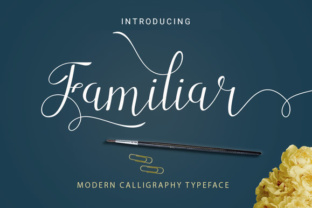
Familiar is a handwritten display font that carries an organic, human touch. It’s loaded with swashes and swooshes, which means you’re not stuck with one static letterform. Each character can take on a different shape depending on the context. The standard ligatures, stylistic alternates, contextual alternates, and stylistic sets work together to create natural word flow. That’s important because when you’re designing something that’s meant to feel personal — like a greeting card or a social media quote — you don’t want it to look like a computer typed it out. You want it to look like someone actually wrote it.
The font is also PUA encoded, which is a technical term that simply means you can access all those fancy alternates and swashes without needing special software. If you’ve ever bought a font and then realized half its features were locked behind some obscure keyboard shortcut you couldn’t figure out, you’ll appreciate how straightforward Familiar is. Everything is easily available in applications like Adobe Illustrator, Photoshop, or even Canva (if you upload it correctly).
Wedding and event invitations
If you’ve ever planned a wedding, you know the invitation sets the entire tone. Couples often spend weeks picking the right paper, the right colors, and the right wording. The font is part of that equation. Familiar works well here because it offers both elegance and warmth. The swashes can be used to add flourishes to the couple’s names, while the ligatures keep the text from looking disjointed. For a rustic outdoor wedding, the slightly informal handwritten style feels genuine. For a more classic affair, you can use the contextual alternates to keep it refined. I’ve seen invitations go from “nice” to “wow” just by swapping out a stiff serif for something like this.
Small business branding
Whether you’re a freelance designer, a boutique owner, or someone running a coffee shop from a vintage cart, your brand identity needs to communicate personality quickly. Familiar does that without trying too hard. It works as a display font for your logo, especially when you have a short business name. The swashes can wrap around a central word or sit underneath it like a subtle underline. For product labels — think artisanal jam jars, candle packaging, or handmade soap — the handwritten quality tells customers this isn’t mass-produced. It says someone cared about the details. That emotional connection is hard to achieve with a conventional sans-serif.
Social media graphics and quote cards
Posting a motivational quote or a line from your favorite poem on Instagram? The font you choose changes how people receive it. A clean Helvetica feels authoritative; a rounded script feels sweet. Familiar sits somewhere in between. It’s readable enough for a square graphic, but it has enough flair to catch the eye. The stylistic sets let you vary the look from post to post without switching typefaces entirely. You can use a more swash-heavy version for a dreamy quote and a simpler set for a straightforward announcement. That kind of flexibility saves time when you’re managing a content calendar.
Digital planners and journal templates
There’s a whole community of people who design digital planners for tablets, and they’re always looking for fonts that mimic real handwriting. Familiar fits that need perfectly. Because it includes contextual alternates, the letters connect and flow like someone actually wrote them. This makes it ideal for headers in a bullet journal, daily logs, or habit trackers. Users who sell digital planner stickers can also use Familiar to add pre-written titles like “Gratitude” or “Weekly Goals” that look hand-drawn but actually took two seconds to place. It saves time while keeping the aesthetic authentic.
Educational materials for young learners
Teachers and homeschooling parents often create their own worksheets, flashcards, and classroom posters. A font that feels friendly and approachable can make a difference, especially for early readers. Familiar’s handwritten style is less intimidating than a rigid textbook font. While it shouldn’t be used for large blocks of body text (it’s a display font after all), it’s great for titles, labels, and short instructions. Imagine a hand-lettered chart of the alphabet or a series of word cards for a spelling game — the organic strokes can help the material feel less like homework and more like a creative activity.
Personal projects and gifts
Not every use of a font is commercial. Sometimes you’re making a birthday banner, a scrapbook page, or a gift tag for a friend. Familiar works for those low-pressure projects too. Because it’s easy to install and use, you don’t need to be a professional designer. You can type out a song lyric, print it on cardstock, and frame it. You can make custom T-shirt designs with heat transfer vinyl. The swashes add a decorative element that would otherwise require you to draw them by hand. For people who want a handmade look without the hand cramps, it’s a practical trade-off.
What to consider before using Familiar
While Familiar is wonderfully versatile, it’s not a one-size-fits-all solution. Because it’s a handwritten display font, it’s not ideal for long paragraphs. The decorative swashes can become distracting if you have too much text. Use it for headlines, short phrases, or elements that need to stand out. If you’re designing a magazine spread or a lengthy blog header image, keep the body copy in a simpler typeface and reserve Familiar for the title.
Another thing to think about is the audience. For very formal corporate communications, a handwritten font might come across as too casual. But for most personal, creative, and small-business applications, that casualness is exactly what you want. Context matters. Also, because the font has so many alternates, you should spend a little time exploring the stylistic sets before committing. Open the font in your design software and test different combinations. Sometimes a specific alternate swash changes the spacing in unexpected ways. A quick preview can save you from having to adjust kerning manually later.
PUA encoding is a big plus, but make sure your software supports it. Most modern design tools do, but some free online editors may not. If you’re working in Canva’s free version, you’ll need to upload the font directly to access the alternates — otherwise you only get the standard letters. That’s a minor extra step, but it’s worth knowing upfront so you’re not disappointed when your swashes don’t appear.
How different users get different results
A blogger might use Familiar for post titles in Pinterest graphics, saving time because they don’t have to draw custom headers each week. A small business owner might use it to create consistent packaging that looks like it was hand-stamped by a local artisan. A calligraphy hobbyist might use it as a base to learn letterforms before developing their own style. What ties these uses together is that Familiar reduces the gap between wanting a handcrafted look and actually achieving it without spending hours with a pen.
One observation I’ve noticed: people often assume that using a font with lots of alternates will automatically make their design look professional. But the real power comes from using those alternates intentionally. If you’re designing a logo, maybe you only use one swash on the first letter and leave the rest simpler. If you’re creating a wedding invitation, you might use the swashes on the couple’s names but keep the ceremony details clean. Restraint is part of the skill. Familiar gives you the tools, but you still decide how much flair is appropriate for the project.
Why Familiar earns its place in your font library
There’s no shortage of handwritten fonts out there. What makes Familiar stand out is how thoughtfully the alternates and ligatures are put together. They don’t feel random. They mimic the natural variations that happen when a human writes — sometimes a letter connects to the next, sometimes it stands alone. That consistency across the stylistic sets means you can rely on it for multiple projects without it looking repetitive. And because it’s PUA encoded, you won’t run into frustrating access issues.
Whether you’re designing products for your small shop, creating content for your blog, or just adding a personal touch to a gift, Familiar is one of those fonts that works harder than you expect. It doesn’t just sit there looking pretty — it adapts to how you want to use it. That’s the kind of tool worth keeping around.